


At some point, almost every homeowner hears about refinancing. A friend mentions they just refinanced and lowered their monthly payment. An ad promises you could save hundreds a month by refinancing today. A mortgage broker calls out of nowhere with an offer that sounds almost too good to pass up.
But refinancing is not automatically a good idea just because it is available to you. It involves closing costs, paperwork, and sometimes years of new interest payments. Done at the right time for the right reasons, it can save you a significant amount of money or give you real financial breathing room. Done at the wrong time, it can cost you more than it saves.
This article walks through what refinancing actually is, the different types available, and most importantly, the situations where it genuinely makes sense versus when it is better to leave your mortgage alone. It covers both the US and UK markets, since the mechanics and terminology differ somewhat between the two.
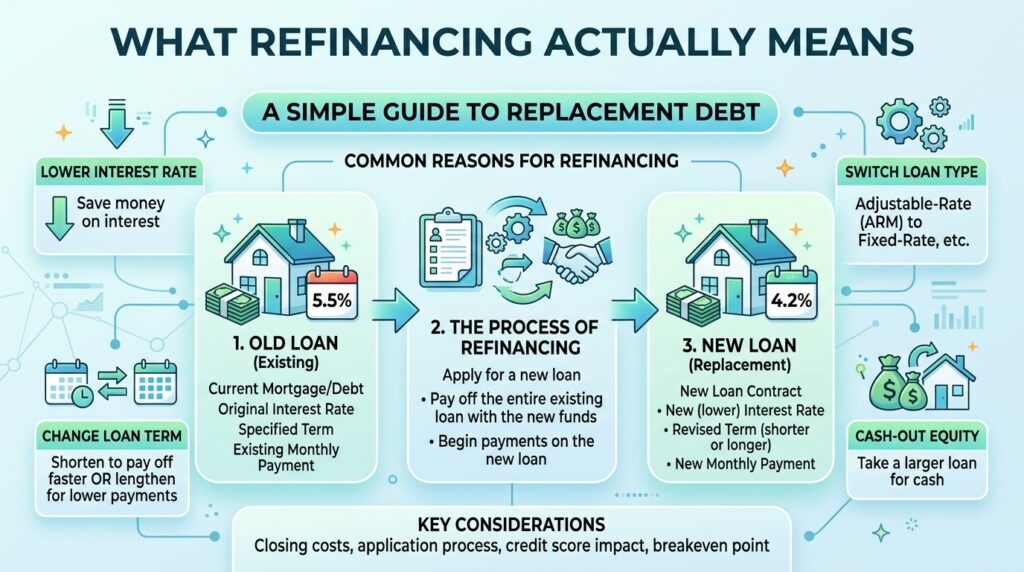
What Refinancing Actually Means
Refinancing means replacing your existing mortgage with a new one. The new loan pays off the old one, and you start fresh with new terms, whether that is a new interest rate, a new repayment length, or a different loan structure altogether.
In the US, this is typically called refinancing and it can be done at essentially any point during your mortgage, subject to lender requirements and any penalties written into your original loan.
In the UK, the equivalent process is usually called remortgaging. Because most UK mortgages come with an initial fixed or discounted rate period, typically two, three, or five years, remortgaging is extremely common once that initial period ends and the loan reverts to the lender’s standard variable rate, which is usually much higher.
The Main Types of Refinancing
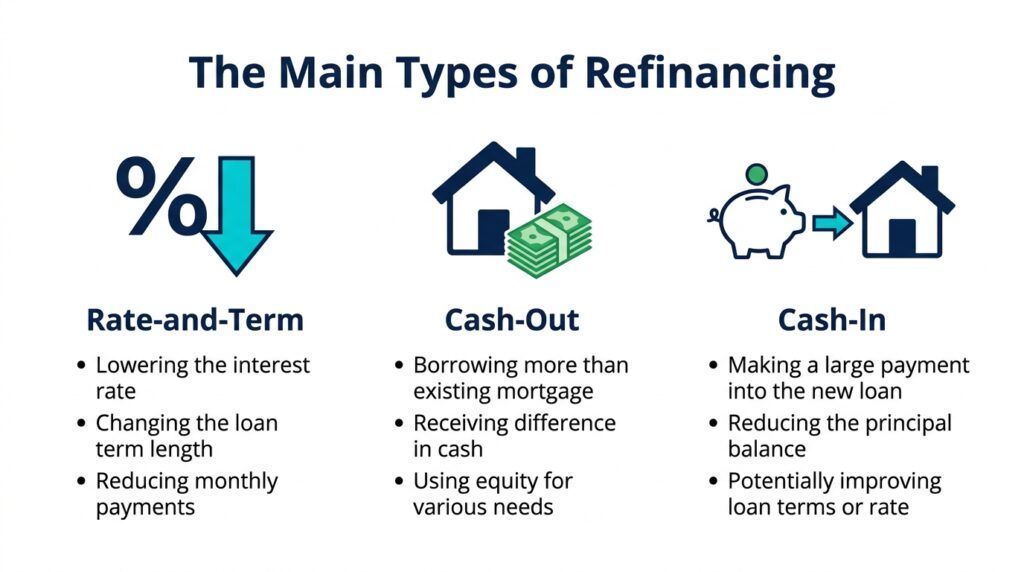
Rate and term refinancing. This is the most straightforward type. You replace your existing mortgage with a new one at a different interest rate, a different loan length, or both. The loan amount stays roughly the same, aside from closing costs.
Cash out refinancing. Here you refinance for more than you currently owe and take the difference in cash. This is popular for funding home renovations, consolidating higher interest debt, or covering major expenses. It increases your loan balance and, depending on the numbers, can increase your monthly payment.
Cash in refinancing. Less common, this is where you bring extra money to the table at closing to reduce your loan balance, often to get under a certain loan to value ratio and qualify for better terms or to remove mortgage insurance.
Streamline refinancing. In the US, certain government backed loans such as FHA and VA loans offer streamlined refinancing options with reduced paperwork and no appraisal requirement in some cases, aimed at quickly lowering your rate.
In the UK, remortgaging usually falls into two broad categories: switching to a new deal with your existing lender, often called a product transfer, or moving to an entirely new lender, which usually involves a fresh affordability assessment and legal work similar to when you first bought the property.
When Refinancing Actually Makes Sense
Interest Rates Have Dropped Meaningfully Since You Took Out Your Loan
This is the classic reason to refinance, and it remains one of the best ones. If market interest rates have fallen since you got your mortgage, and the drop is large enough to offset the closing costs within a reasonable time frame, refinancing can lower your monthly payment and save you a substantial amount over the life of the loan.
A common rule of thumb in the US is that refinancing starts to make sense once you can lower your rate by around three quarters of a percentage point to a full percentage point, though this depends heavily on your loan size, how long you plan to stay in the home, and the specific closing costs quoted to you. The math needs to actually work out, not just feel right.
In the UK, the calculation looks slightly different because most people are comparing their current deal against new fixed rate offers as their existing deal expires. If your fixed rate is ending and current rates on offer are considerably lower than the lender’s standard variable rate you would otherwise fall onto, remortgaging to a new fixed deal usually makes financial sense.
Your Credit Score Has Significantly Improved
If your credit score was mediocre when you first got your mortgage and has since improved substantially, you may now qualify for a meaningfully better interest rate than you originally received. Lenders reserve their best rates for borrowers with strong credit profiles, so a jump from a fair score to a very good or excellent score can translate into real savings.
You Want to Switch from an Adjustable Rate to a Fixed Rate
Adjustable rate mortgages in the US, or trackers and variable rate deals in the UK, can be appealing early on because of lower initial rates, but they carry uncertainty. If you are worried about rising interest rates in the future, or you simply want predictability in your monthly budget, refinancing into a fixed rate mortgage can provide peace of mind even if the immediate savings are not dramatic.
You Want to Shorten Your Loan Term
If your financial situation has improved and you can comfortably afford higher monthly payments, refinancing from a 30 year loan into a 15 year loan, for example, can save an enormous amount in total interest paid over time, even though the monthly payment itself might increase. This works well for people who got a pay rise, paid off other debts, or simply want to be mortgage free sooner.
You Need to Remove Private Mortgage Insurance
In the US, if you originally put down less than 20 percent, you are likely paying private mortgage insurance. Once your home has appreciated in value or you have paid down enough of the loan to reach 20 percent equity, refinancing can allow you to eliminate this extra monthly cost, assuming your new loan to value ratio qualifies.
You Want to Access Home Equity for a Specific Purpose
Cash out refinancing can make sense if you are using the funds for something that improves your financial position or your home’s value, such as a kitchen renovation that increases resale value, consolidating high interest credit card debt into a lower interest mortgage rate, or covering a major and unavoidable expense. This should be approached carefully though, since you are turning unsecured debt or a discretionary expense into debt secured against your home.
Your Fixed Rate Deal in the UK Is About to End
This deserves its own mention because it is one of the most common and clear cut reasons to remortgage in the UK. When a fixed rate period ends, borrowers are automatically moved onto their lender’s standard variable rate, which is typically noticeably higher. Remortgaging to a new competitive deal before this happens, usually starting the process three to six months in advance, avoids months of paying an inflated rate unnecessarily.
When Refinancing Does Not Make Sense
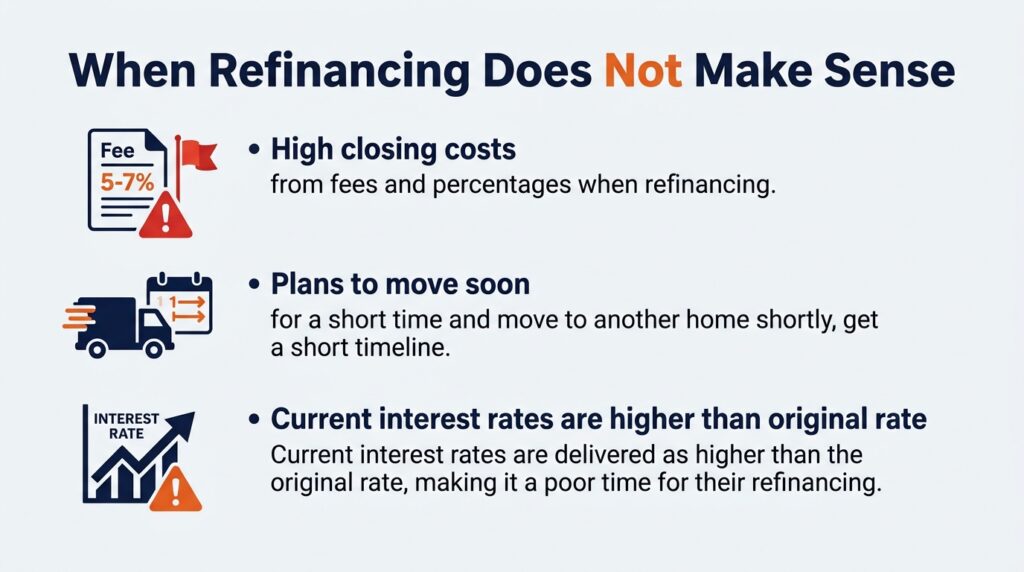
You Plan to Move Soon
Closing costs on a refinance typically run between 2 and 6 percent of the loan amount in the US, and while UK remortgaging costs are often lower, there are still valuation fees, legal fees, and sometimes early repayment charges to consider. If you are planning to sell your home within a couple of years, you may not stay in the loan long enough to recoup those upfront costs through your monthly savings.
The Rate Difference Is Too Small
If current rates are only marginally better than what you already have, the closing costs may outweigh the savings, especially if you do not plan to stay in the home for many years. Always calculate your breakeven point, the number of months it takes for your monthly savings to equal the total cost of refinancing, before moving forward.
You Would Be Extending Your Loan Term Significantly
Refinancing back into a fresh 30 year term when you already have, say, 20 years left on your current mortgage can lower your monthly payment, but it may increase the total interest you pay over the life of the loan, even at a lower rate. This is worth running the numbers on carefully rather than focusing purely on the monthly payment figure.
Your Home Has Lost Value
If your home’s value has dropped since you bought it, you may not have enough equity to qualify for favorable refinancing terms, or you may not qualify at all, particularly for conventional loans in the US that typically require a certain loan to value ratio.
There Are Early Repayment Charges on Your Current Deal
In the UK especially, many fixed rate mortgages come with early repayment charges if you leave the deal before its term ends, sometimes amounting to several percent of the remaining balance. Unless the savings from a new deal clearly outweigh this penalty, it is usually better to wait until your current deal naturally ends.
You Are Using Cash Out Refinancing to Fund Ongoing Expenses
Using home equity to pay off a one time expense is one thing, but using cash out refinancing repeatedly to cover everyday spending or lifestyle costs slowly erodes your home equity and can leave you in a worse financial position over the long run, especially if home values later decline.
Your Credit Score Has Actually Gotten Worse
If your financial situation has deteriorated since you took out your original mortgage, refinancing now might mean qualifying for a worse rate than you currently have, which obviously defeats the purpose entirely.
The Real Costs Involved
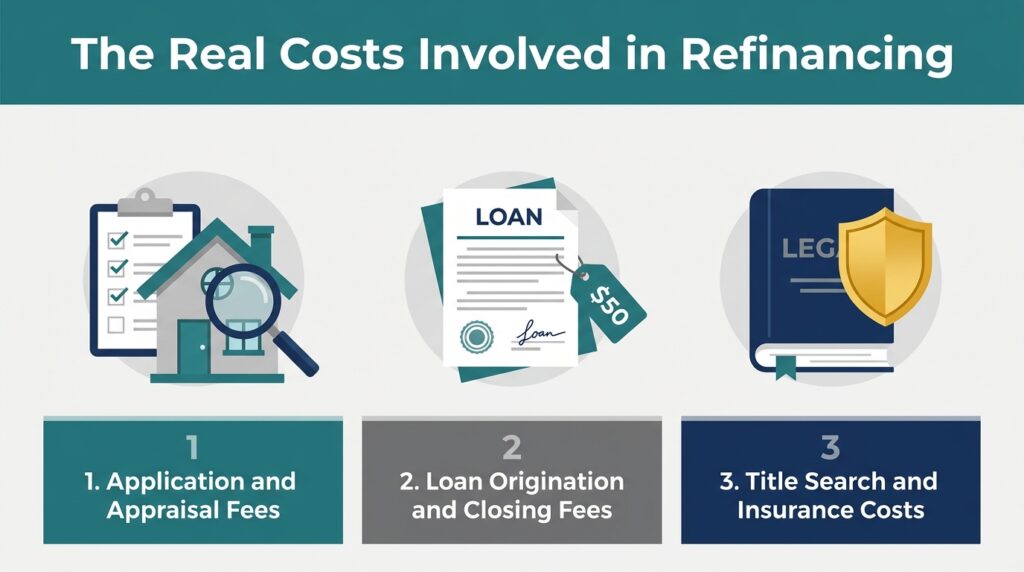
It is easy to focus purely on the interest rate and forget about the fees that come with any refinance or remortgage. In the US, typical closing costs include loan origination fees, appraisal fees, title insurance, attorney fees in some states, and recording fees. These commonly add up to thousands of dollars depending on the loan size and location.
In the UK, remortgaging costs usually include a valuation fee, though many lenders now offer free valuations as part of a deal, legal fees, sometimes covered by the lender as an incentive, an early repayment charge if leaving a current deal early, and potentially a product fee charged by the new lender, which can sometimes be added to the loan itself rather than paid upfront.
Always ask for a full breakdown of fees before committing, and compare the annual percentage rate of charge, known as APRC in the UK or APR in the US, rather than just the headline interest rate, since this figure includes most of the associated fees and gives a more accurate picture of the true cost.
How to Calculate Whether It Is Worth It
A simple way to think about whether refinancing makes sense is to work out your breakeven point. Take the total cost of refinancing, including all fees, and divide it by your estimated monthly savings. This tells you roughly how many months it will take before the refinance actually starts saving you money.
For example, if refinancing costs 4,000 dollars in total fees and saves you 150 dollars per month, your breakeven point is a little over 26 months. If you plan to stay in the home well beyond that point, the refinance likely makes sense. If you expect to move or sell before then, it probably does not.
It is also worth considering the total interest paid over the life of each loan option, not just the monthly payment. A lower monthly payment achieved by extending your loan term can sometimes mean paying significantly more in total interest, even at a reduced rate.
Questions Worth Asking Before You Refinance
Before signing anything, it helps to sit down and honestly answer a few questions. How long do you realistically plan to stay in this home. Has your credit score improved enough to unlock a meaningfully better rate. What is the total cost of this refinance including every fee involved. What is your breakeven point, and are you comfortable with that timeline. Are you refinancing to solve a real financial problem, such as reducing monthly strain or eliminating costly mortgage insurance, or simply because a lower headline rate looked appealing without checking the full picture.
If you are in the UK and remortgaging because your fixed deal is ending, it is worth starting the process early, since most new deals can be secured three to six months in advance and locked in, protecting you from any rate increases in the meantime while still allowing you to switch to something better if rates fall before your current deal actually ends.
Shopping Around Matters
Whether in the US or the UK, it rarely makes sense to only speak to your current lender. Getting quotes from several lenders or working with a mortgage broker who can compare deals across the market often reveals meaningfully better options than what you would find by staying loyal to your existing provider out of convenience. Even a small difference in interest rate can translate into thousands of dollars or pounds over the life of a loan, so the time spent comparing offers is almost always worth it.
In the US, getting rate quotes from three to five lenders within a short window, typically within a two week period, is generally treated as a single credit inquiry for scoring purposes, so shopping around does not meaningfully hurt your credit score.
In the UK, using a whole of market mortgage broker, rather than one tied to a single lender, can help ensure you are seeing genuinely competitive deals rather than a limited selection.
Final Thoughts
Refinancing a mortgage is neither automatically good nor automatically bad. It is a financial tool that works well in specific circumstances, primarily when interest rates have dropped meaningfully, your credit has improved, your current deal is expiring, or you have a clear and financially sound reason to access home equity. It works poorly when the savings do not outweigh the costs, when you plan to move soon, or when it is used to repeatedly tap into equity for ongoing expenses rather than a genuine one time need.
The best approach is always the same regardless of which country you are in. Run the actual numbers, including every fee involved, calculate your breakeven point honestly, and compare multiple offers before making a decision. A refinance that looks attractive on the surface because of a slightly lower rate can turn out to be a poor decision once the full cost is accounted for, while a refinance that seems unnecessary at first glance can turn out to save you a considerable amount over time if the math genuinely supports it.
Taking the time to actually calculate rather than assume is what separates a refinance that helps your finances from one that simply adds complexity without real benefit.
This article is for general informational purposes and is not financial or legal advice. Mortgage products, fees, and regulations vary by lender and by individual circumstances, so it is worth speaking with a qualified mortgage adviser or broker before making refinancing decisions specific to your situation.