
If you are staring at a pile of bills and wondering how you are ever going to pay them all off, you are far from alone. Millions of people across the United States and the United Kingdom carry credit card balances, personal loans, and other debts that feel like they are growing faster than they can be paid down. When the stress gets heavy enough, two options usually come up in conversation: debt consolidation and debt settlement.
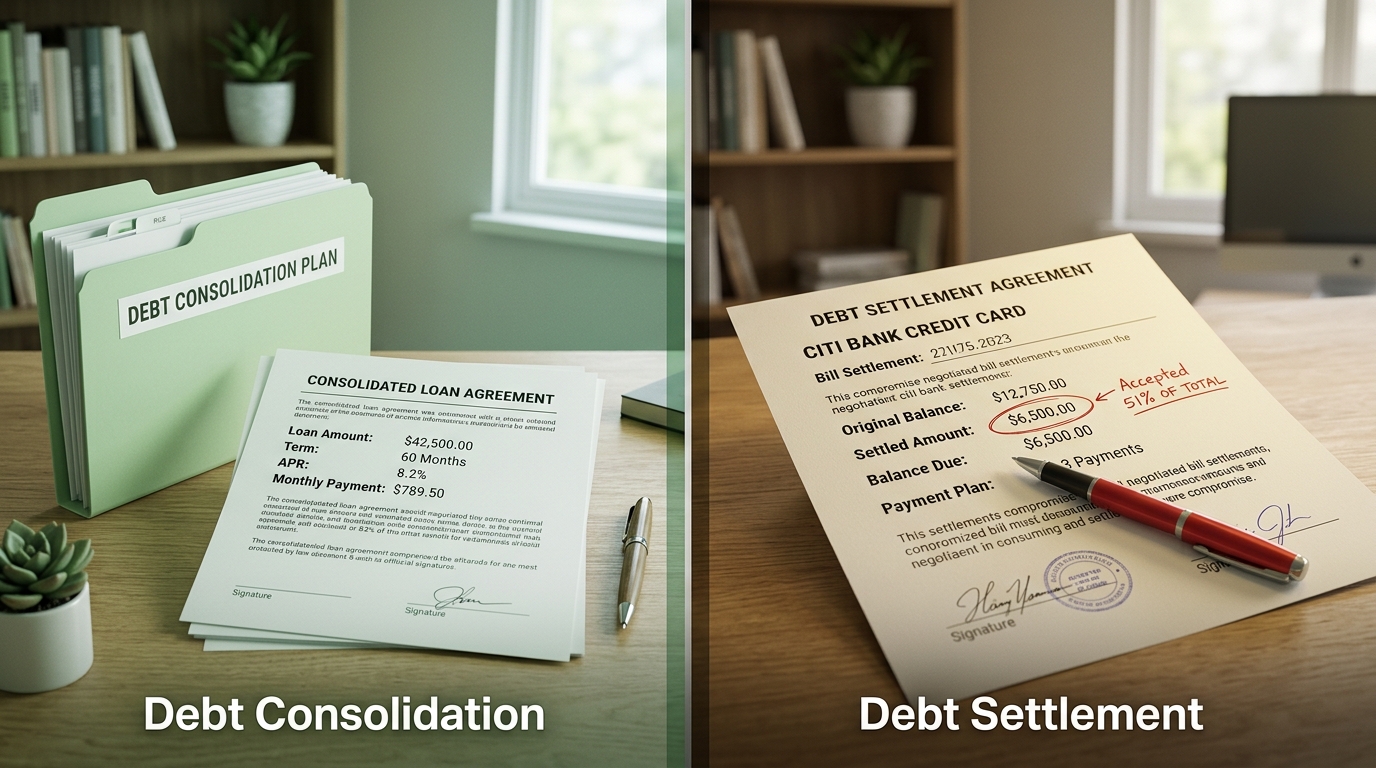
These two terms sound similar, and people often mix them up, but they work in completely different ways. One is about organizing your debt into a single, more manageable payment. The other is about negotiating your debt down to a smaller amount, often at a real cost to your credit and sometimes your tax bill. Choosing the wrong one for your situation can leave you worse off than when you started, so it is worth understanding exactly how each one works before you sign anything.
This article breaks down both options in plain language, covers how they apply in both the US and the UK, and walks through the real pros and cons so you can figure out which path, if either, makes sense for you.
What Is Debt Consolidation
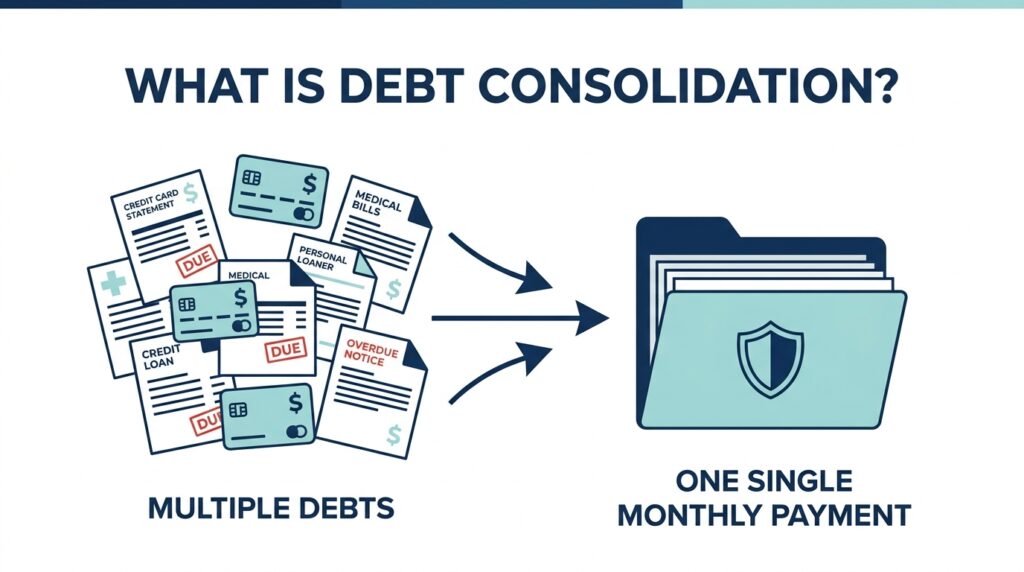
Debt consolidation means combining several debts into one. Instead of juggling five credit card payments, two personal loans, and a store card, you take out a single new loan or line of credit large enough to pay off all the smaller debts. From that point on, you only have one monthly payment to keep track of, ideally at a lower interest rate than what you were paying before.
The core idea is simplicity and, hopefully, savings on interest. It does not reduce how much you owe. You still pay back the full amount. What changes is the structure: one payment, one due date, and often a lower rate.
Common Ways to Consolidate Debt
Personal loans. Banks, credit unions, and online lenders offer personal loans specifically marketed for debt consolidation. You borrow a lump sum, pay off your existing debts immediately, and then repay the new loan in fixed monthly installments over a set number of years.
Balance transfer credit cards. Many credit card companies offer promotional periods with very low or 0 percent interest on transferred balances, often for 12 to 21 months. You move your existing credit card debt onto this new card and try to pay it off before the promotional period ends and the regular interest rate kicks in.
Home equity loans or lines of credit. If you own a home and have built up equity, you can borrow against that equity to pay off other debts. This usually comes with a lower interest rate because the loan is secured against your property. The risk here is significant though, because your home becomes collateral.
Retirement account loans. In the US, some people borrow from their 401k to pay off debt. This is generally discouraged by financial professionals because it reduces retirement savings and can carry penalties if not repaid on schedule.
In the UK, similar consolidation tools exist. These include personal loans from banks and building societies, balance transfer credit cards (though 0 percent offers tend to be shorter than in the US), and secured loans against property. Debt Management Plans, arranged through free services like StepChange or National Debtline, are also a form of informal consolidation where a single monthly payment is distributed among creditors, though this is slightly different from taking out a new loan.
Pros of Debt Consolidation
One payment instead of many. This alone reduces stress considerably. Missing payments because you forgot a due date becomes far less likely when there is only one date to remember.
Potentially lower interest rate. If your credit score is decent, you may qualify for a consolidation loan with a lower rate than your credit cards were charging, which means more of your payment goes toward the principal rather than interest.
Fixed repayment timeline. Most consolidation loans have a clear end date. You know exactly when you will be debt free if you stick to the plan, which is not always true with revolving credit card debt.
Credit score protection. As long as you keep making payments on time, consolidation does not damage your credit the way settlement or bankruptcy can. In fact, paying down revolving credit card balances with an installment loan can improve your credit utilization ratio and boost your score over time.
No negotiation or damage to relationships with creditors. You are not defaulting on anything. You are simply refinancing your debt through legitimate channels.
Cons of Debt Consolidation
You still owe the full amount. Consolidation does not erase debt. If your real problem is that you owe more than you can reasonably repay, moving the debt around will not fix that.
Requires decent credit to get good terms. If your credit score has already taken a hit from missed payments, you may not qualify for a low interest rate, which defeats much of the purpose.
Balance transfer cards have time limits. If you do not pay off the balance before the promotional rate expires, the remaining balance can jump to a high standard interest rate, sometimes higher than what you started with.
Risk with secured loans. If you use your home as collateral through a home equity loan and then struggle to make payments, you risk losing your home. Turning unsecured credit card debt into secured debt is a serious decision.
Temptation to rack up new debt. Some people pay off their credit cards through consolidation, feel a sense of relief, and then start using those same cards again, ending up with both the consolidation loan and new credit card debt.
Fees. Origination fees, balance transfer fees, and closing costs on secured loans can add up and eat into the savings you were hoping to gain.
What Is Debt Settlement
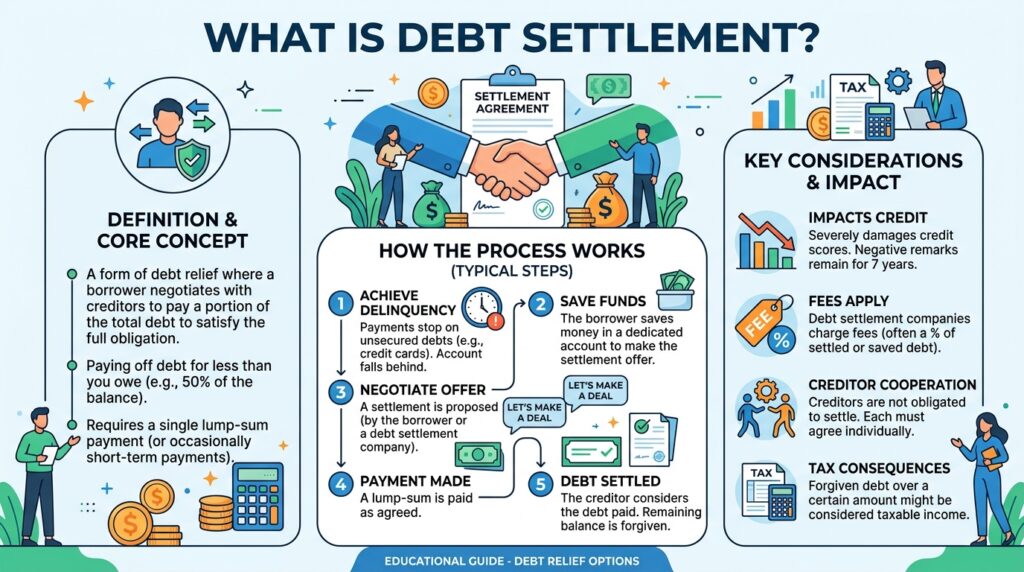
Debt settlement takes a very different approach. Rather than paying back the full amount owed, you or a company negotiate with your creditors to accept a lump sum that is less than what you actually owe, often significantly less. In exchange, the creditor agrees to consider the debt resolved.
This can happen in two main ways. You can attempt to negotiate directly with your creditors yourself, which costs nothing extra but requires confidence, time, and a willingness to have some uncomfortable phone calls. Or you can hire a debt settlement company that negotiates on your behalf, usually in exchange for a percentage of the debt enrolled or the amount saved.
Debt settlement companies typically ask you to stop paying your creditors directly and instead deposit money each month into a dedicated savings account. Once enough money has built up, the company uses those funds to negotiate lump sum settlements with each creditor, one at a time. This process can take anywhere from two to four years.
In the UK, the closest equivalent to debt settlement is often handled through an Individual Voluntary Arrangement, known as an IVA, or through full and final settlement offers negotiated with creditors directly, sometimes with help from a licensed insolvency practitioner. An IVA is a formal, legally binding agreement to repay a portion of your debt over a set period, typically five to six years, after which the remaining debt is written off. It is more structured and regulated than the debt settlement industry in the US, but it carries similarly serious consequences for your credit file.
Pros of Debt Settlement
You may pay back less than you owe. This is the headline benefit. If a creditor agrees to settle a debt for 50 percent of the balance, you have genuinely reduced what you owe, assuming you can come up with that lump sum.
Can be faster than minimum payments. If you are only making minimum payments on high interest credit cards, it could take decades to pay off the full balance. A successful settlement plan, though painful, can resolve debts in a few years.
Avoids bankruptcy for some people. For those who would otherwise be considering bankruptcy, settlement can feel like a middle ground that avoids the most severe long term consequences of a bankruptcy filing.
One structured plan. Working with a reputable settlement company means you are not fielding calls from multiple creditors on your own. There is a single monthly deposit and a plan being worked through, even if that plan takes years.
Cons of Debt Settlement
Serious credit score damage. To pursue settlement, you typically have to stop paying your creditors, which means missed payments get reported and your credit score drops sharply. This impact can last for years and shows up on your credit report as settled for less than owed, which future lenders can see.
No guarantee creditors will agree. Creditors are not obligated to accept a settlement offer. Some will refuse, sue for the full amount, or send the debt to a collections agency. There is real financial risk in stopping payments while hoping for a deal that may never materialize.
Fees can be high. Settlement companies in the US often charge 15 to 25 percent of the enrolled debt or the amount saved. If you have 20,000 dollars in debt, that could mean thousands of dollars in fees on top of whatever you still owe after settlement.
Interest and penalties keep piling up while you save. During the months or years you are saving up money for a lump sum settlement, interest and late fees continue accruing on your original debt, meaning your balance can actually grow before it shrinks.
Possible legal action. Some creditors, especially if they feel a settlement offer is unreasonable, may take legal action to recover the full amount, including wage garnishment in some cases.
Tax implications. In the US, forgiven debt over 600 dollars is generally considered taxable income by the IRS and creditors are required to send you a 1099C form. This means you could end up owing taxes on the amount that was forgiven, which catches many people off guard. In the UK, tax treatment of written off debt through an IVA is different and generally does not create the same income tax exposure, but it is still worth checking with a professional adviser since individual circumstances vary.
Emotional toll. Constant calls from collections agencies, uncertainty about whether creditors will agree to settle, and watching your credit score fall can be genuinely stressful for an extended period.
Comparing the Two Side by Side
| Factor | Debt Consolidation | Debt Settlement |
|---|---|---|
| Amount owed | Full amount, restructured | Often reduced, but not guaranteed |
| Credit score impact | Minimal if payments stay current | Significant negative impact |
| Timeline | Usually 2 to 7 years | Usually 2 to 4 years |
| Risk level | Lower, especially with unsecured loans | Higher, with legal and tax risks |
| Best suited for | People with steady income and decent credit | People in genuine financial hardship who cannot keep up with payments |
| Cost | Interest and possible fees | Settlement company fees, plus possible taxes |
Which One Might Be Right for You
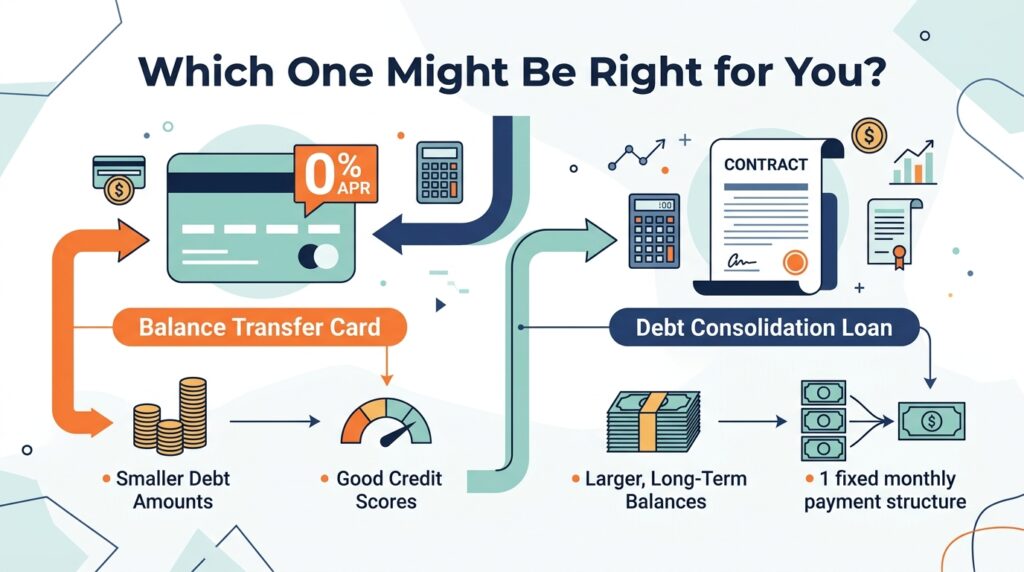
Neither option is universally better. It depends heavily on your specific financial situation, your credit standing, and how much breathing room you have in your monthly budget.
Debt consolidation tends to make more sense if you can still afford your minimum payments but want to simplify things and reduce interest costs. It works well for people who have a steady income, a reasonable credit score, and debt that is manageable but disorganized. If your main problem is high interest rates and multiple due dates rather than an inability to pay at all, consolidation is usually the gentler and less risky route.
Debt settlement tends to be considered by people who are already behind on payments, facing potential collections or legal action, and genuinely cannot afford to pay back the full amount they owe within a reasonable time frame. It is often seen as an alternative to bankruptcy rather than an alternative to normal repayment. Because of the credit damage, tax exposure, and lack of guarantees, it is generally viewed as a more serious step that should come after exploring other options.
Before choosing either path, it is worth asking yourself a few honest questions. Can you realistically afford your current payments if you cut back on other expenses. Is your credit score healthy enough to qualify for a decent consolidation loan. Are you behind on payments already, or at real risk of falling behind soon. Would a nonprofit credit counseling service or a free debt advice charity be a better first stop before committing to either path.
Free Help Before You Pay for Help
Both in the US and the UK, there are free resources designed to help people sort through debt problems before turning to paid services.
In the US, nonprofit credit counseling agencies, many of which are accredited through the National Foundation for Credit Counseling, offer free or low cost budget reviews and can set up a Debt Management Plan. A DMP is similar to consolidation in that you make one monthly payment, but the agency distributes it to your creditors, often with reduced interest rates negotiated on your behalf, without the credit damage that comes from settlement.
In the UK, organizations such as StepChange, National Debtline, and Citizens Advice offer completely free debt advice. They can help you understand whether a Debt Management Plan, an IVA, or another solution like a Debt Relief Order fits your situation, without charging the fees that private settlement firms often do.
Talking to one of these organizations first, before signing up with any paid consolidation or settlement company, can save you money and help you avoid decisions you might regret.
Watching Out for Scams
Unfortunately, the debt relief industry attracts predatory companies looking to profit from people in vulnerable financial situations. A few warning signs are worth knowing regardless of which country you are in.
Be cautious of any company that asks for large upfront fees before doing any actual negotiation work. In the US, this is actually illegal for telemarketed debt settlement services under Federal Trade Commission rules, fees can only be collected after a debt is actually settled.
Be wary of guarantees that sound too good, such as promises to erase all your debt or guarantee a specific reduction percentage before even reviewing your finances. No legitimate company can guarantee creditor cooperation in advance.
Check whether a company is properly registered and accredited. In the UK, look for firms regulated by the Financial Conduct Authority. In the US, look for accreditation through recognized nonprofit counseling bodies if you are considering credit counseling, or verify a settlement company’s standing with your state attorney general’s office.
Read every contract carefully, and if something feels rushed or high pressure, it is reasonable to step back and get a second opinion, ideally from a free advice service first.
Final Thoughts
Debt consolidation and debt settlement solve different problems. Consolidation is about making your existing debt easier to manage and potentially cheaper through a lower interest rate, while keeping your credit intact and your obligations fully honored. Settlement is a more drastic step aimed at reducing the actual amount owed, but it comes with real damage to your credit, no guarantee of success, and in the US, potential tax consequences on the forgiven amount.
If you are unsure which direction fits your circumstances, it is worth spending time with a free, accredited debt advice service before signing any agreement. A clear eyed look at your income, your debts, and your realistic ability to repay will point you toward the option that actually helps rather than one that simply feels like a quick fix.
Getting out of debt rarely happens overnight, whichever path you choose. But understanding exactly what each option involves, including the fine print most people skip over, puts you in a much stronger position to make a decision you will not regret a few years down the line.
This article is for general informational purposes and is not financial or legal advice. Debt relief options vary based on individual circumstances, and it is worth speaking with a qualified financial adviser or a free, accredited debt counseling service before making decisions about your specific situation.