


Buying your first home is exciting, but it can also feel overwhelming. There are so many new terms, so many steps, and so much money involved that it is easy to feel lost before you even start looking at houses. One of the very first steps in the process, and one of the most important, is mortgage pre approval.
This guide explains what pre approval actually is, why it matters so much, how it works in the USA and the UK, and how to get through the process smoothly as a first time buyer.
What Is Mortgage Pre Approval
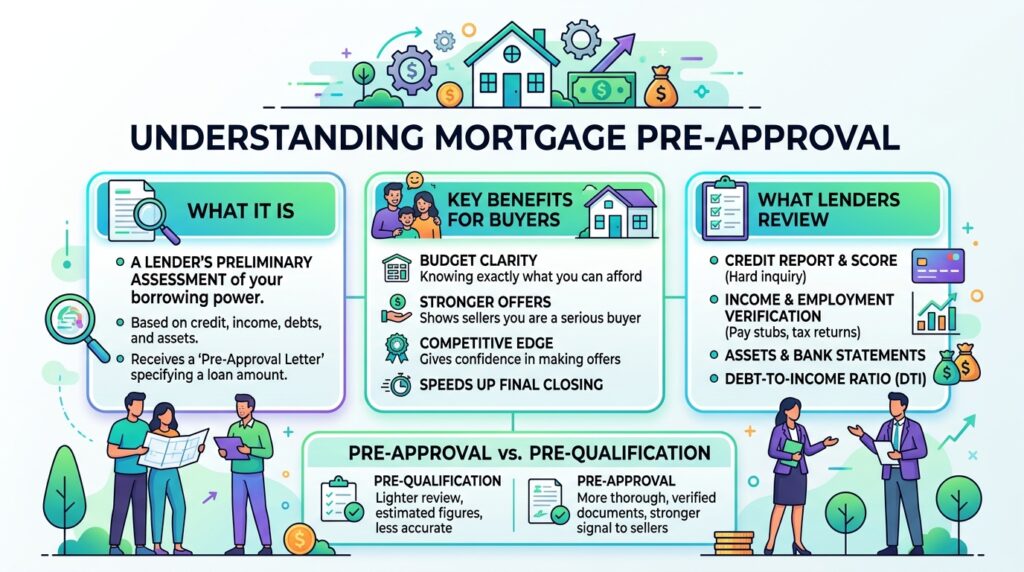
Mortgage pre approval is when a lender reviews your financial information and tells you, in writing, roughly how much they are willing to lend you to buy a home. It is not a final guarantee of a loan, but it is a strong signal that shows sellers, real estate agents, and yourself that you are a serious and qualified buyer.
To get pre approved, you usually need to provide documents such as proof of income, bank statements, information about your debts, and details about your employment. The lender uses all of this to estimate how much you can realistically afford to borrow, based on their own lending rules.
Once pre approved, you receive a letter or document stating the amount you are approved for, along with the type of loan and sometimes an estimated interest rate. This document becomes an important tool once you start making offers on homes.
Pre Approval Versus Pre Qualification
Many first time buyers get confused between pre approval and something called pre qualification, and honestly, the confusion is understandable since the two sound almost identical.
Pre qualification is a quick, informal estimate based on information you simply tell the lender yourself, without them verifying anything. It might take just a few minutes and can be done online or over the phone. It gives you a rough idea of what you might be able to borrow, but it holds very little weight with sellers since nothing has actually been checked or confirmed.
Pre approval, on the other hand, involves the lender actually verifying your income, checking your credit history, and reviewing real documents you provide. Because of this deeper check, pre approval carries much more credibility. When you are ready to make an offer on a home, sellers and their agents want to see a pre approval, not just a pre qualification, since it shows you have already been vetted by a real lender.
Think of pre qualification as a rough guess and pre approval as a confirmed estimate based on actual proof.
Why Pre Approval Matters So Much
Getting pre approved before you start house hunting brings several major benefits.
First, it tells you your real budget. Many first time buyers have a number in their head based on what they think they can afford, but that number is not always accurate once a lender looks at your actual finances. Pre approval gives you a realistic number to work with, so you are not wasting time looking at homes outside your true price range.
Second, it makes your offers stronger. In a competitive housing market, sellers often receive multiple offers on the same home. A seller is far more likely to accept an offer from a buyer who has already proven they can get financing, rather than someone who has not even started that process yet.
Third, it speeds up the overall process. Since much of the financial verification has already happened during pre approval, the final loan approval process tends to move faster once you actually find a home and make an offer.
Fourth, it can reveal problems early. Sometimes the pre approval process uncovers issues with your credit report or your financial documents that you did not know about. Finding these problems early gives you time to fix them before you are in the middle of trying to buy a specific house under a tight deadline.
How the Process Works in the USA
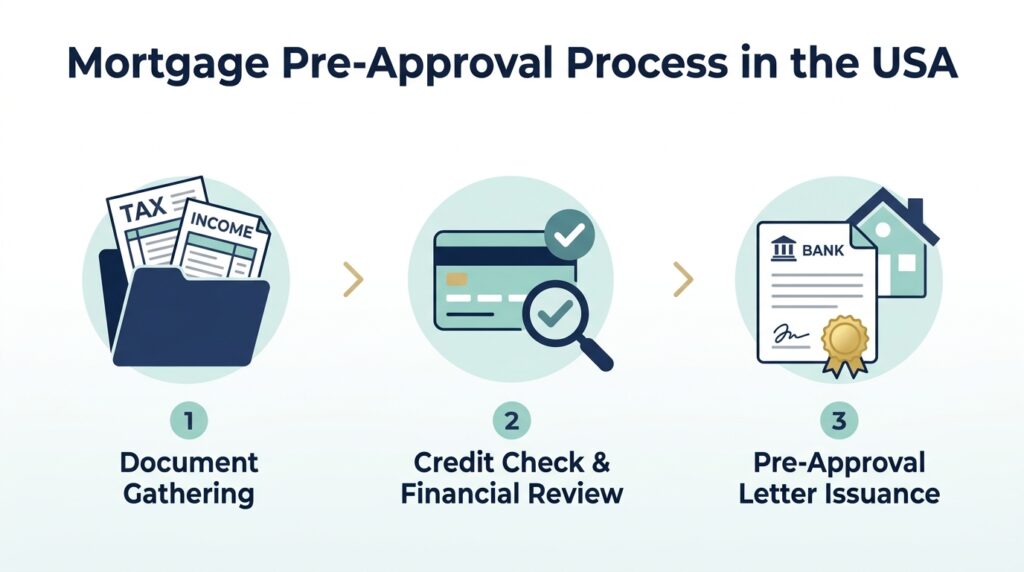
In the United States, the mortgage pre approval process usually starts with choosing a lender. This could be a bank, a credit union, or an independent mortgage lender. It is smart to compare a few different lenders rather than just going with the first one you find, since interest rates and fees can vary.
Once you choose a lender, or a few to compare, you will need to gather documents such as recent pay stubs, tax returns from the past couple of years, bank statements, and information about any other debts you carry, such as car payments or student loans.
The lender will then check your credit score and credit history, since this plays a large role in what kind of loan you qualify for and what interest rate you are offered. In the United States, credit scores typically range from around three hundred to eight hundred fifty, and generally, a higher score leads to better loan terms.
The lender uses your income, debts, and credit information to calculate what is often called your debt to income ratio, which compares how much you owe each month to how much you earn. This ratio helps them determine how large of a monthly mortgage payment you could reasonably handle.
Once everything is reviewed, you receive a pre approval letter, which usually lists the loan amount you qualify for and is often valid for a set number of months, commonly somewhere around sixty to ninety days, after which you may need to update it if your home search takes longer.
How the Process Works in the UK
In the United Kingdom, the equivalent step is sometimes called a mortgage agreement in principle, sometimes shortened to AIP, or also referred to as a decision in principle.
The process starts similarly, by approaching a bank, building society, or working with a mortgage broker who can compare options across multiple lenders on your behalf. Many first time buyers in the UK find working with a broker helpful, since brokers often have access to a wider range of deals and can help explain unfamiliar terms.
You will need to provide proof of income, bank statements, and information about your existing debts, similar to the process in the United States. Lenders in the UK also check your credit history through credit reference agencies, and they will look closely at how you manage your existing finances, including things like overdraft usage and any missed payments.
The lender calculates how much they are willing to lend based on your income and outgoings, and you receive a document confirming the amount, which is usually valid for around ninety days, though this can vary between lenders.
It is worth noting that in the UK, this agreement in principle is generally considered slightly less binding than the American pre approval process, since a full mortgage application with more detailed underwriting still needs to happen once you have found a specific property, particularly involving a valuation of that property.
Documents You Will Likely Need
While exact requirements vary by lender and country, most first time buyers should prepare to gather the following types of documents ahead of time, since having them ready can speed things up considerably.
Proof of identity, such as a passport or driving license, is almost always required.
Proof of income is essential, which usually means recent pay stubs or payslips, and if you are self employed, tax returns or accountant prepared financial statements covering the past couple of years.
Bank statements from the past few months are typically requested, since lenders want to see your spending habits and confirm the source of any savings you plan to use.
Details of existing debts, including credit cards, car loans, and student loans, help the lender understand your full financial picture.
Proof of your deposit or down payment savings is often required, showing where that money came from and that it has been sitting in your account for a reasonable period of time, since sudden large deposits from unclear sources can raise questions.
Employment verification, sometimes in the form of a letter from your employer, may also be requested to confirm your job stability.
Understanding How Your Credit Score Plays a Role
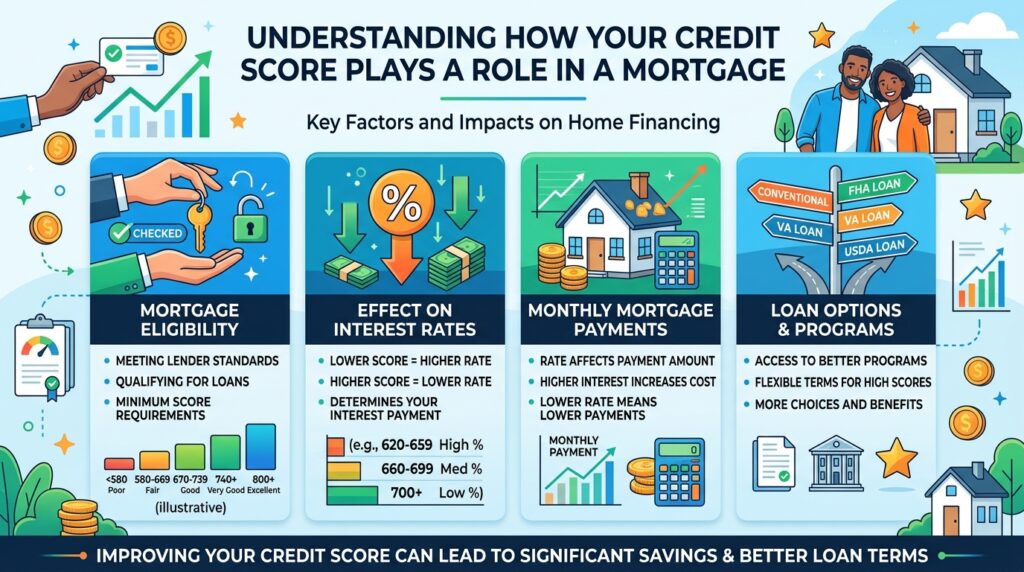
Your credit score is one of the biggest factors influencing your pre approval, both in the USA and the UK. It reflects your history of borrowing and repaying money, and lenders use it as a signal of how reliably you are likely to make future mortgage payments.
Before applying for pre approval, it is worth checking your own credit report ahead of time, since both countries allow you to request your credit history from major credit reporting agencies. This lets you catch and dispute any errors before a lender sees them, and gives you a chance to improve your score if needed.
Simple habits that tend to help your credit score include paying all your bills on time, keeping your credit card balances low relative to your limits, and avoiding opening several new credit accounts right before applying for a mortgage, since each new application can cause a small dip in your score.
Common Mistakes First Time Buyers Make
Making large purchases right before or during the pre approval process is a common and costly mistake. Buying a new car, financing furniture, or opening a new credit card can change your debt to income ratio or credit score enough to affect your approval, sometimes even after you have already been pre approved.
Changing jobs during the process can also complicate things, since lenders like to see steady, consistent income. If a job change is unavoidable, it helps to talk to your lender beforehand so they understand the situation.
Ignoring your credit report ahead of time is another mistake. Many buyers are surprised by errors or old debts that show up on their credit history, and dealing with these issues after you have already found your dream home creates unnecessary stress.
Assuming pre approval is a guarantee is a mistake worth avoiding as well. Pre approval is based on the information available at that time, but final approval still depends on the specific home you choose, its appraised value, and any changes to your financial situation between pre approval and closing.
Waiting too long to get pre approved is another common issue. Some buyers start house hunting first and only think about financing once they find a home they love, which can put them at a disadvantage compared to buyers who arrive already pre approved and ready to move quickly.
How Long Pre Approval Lasts and What Happens Next
Pre approval is not permanent. It usually lasts somewhere between sixty and ninety days, though this varies by lender and country. If your home search takes longer than that, you may need to update your financial documents and go through a refreshed check.
Once you find a home and make an offer, the pre approval becomes part of your official mortgage application. At this stage, the lender will look more closely at the specific property, often requiring an appraisal or valuation to confirm the home is worth the amount being borrowed. This is a separate step from pre approval, focused specifically on the property itself rather than just your personal finances.
Assuming everything checks out, from your finances to the property valuation, the loan moves toward final approval, and eventually to closing, where ownership of the home officially transfers to you.
Tips to Make the Process Smoother
Start early, ideally several months before you actually plan to buy, so you have time to check your credit, fix any issues, and save up your deposit or down payment without feeling rushed.
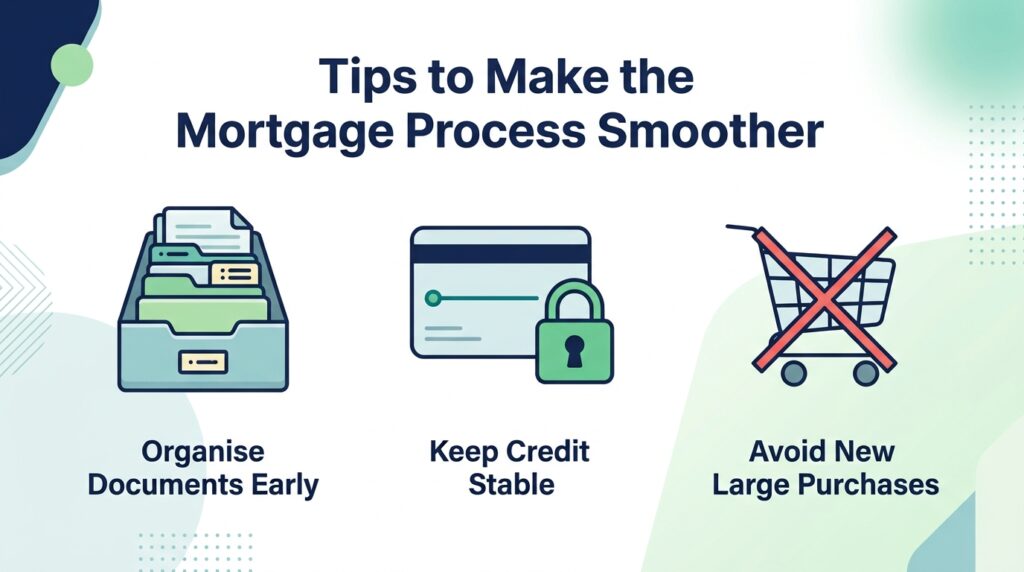
Keep your financial life stable during the process. Avoid large purchases, new loans, or job changes if you can help it, at least until after your final mortgage approval is complete.
Compare multiple lenders rather than settling for the first offer you receive, since interest rates and terms can vary meaningfully between lenders, and even a small difference in rate can add up to a large amount of money over the life of a loan.
Keep your documents organized in one place from the very beginning, since you will likely be asked for similar paperwork more than once throughout the process.
Ask questions whenever something is unclear. Mortgage terminology can be confusing, and a good lender or broker should be willing to explain anything you do not understand without making you feel rushed or embarrassed.
Final Thoughts
Mortgage pre approval might feel like just one small step in a long journey toward buying your first home, but it plays a much bigger role than most first time buyers expect. It gives you a realistic budget, strengthens your position when making offers, and can even reveal financial issues worth fixing before they become a problem later in the process.
Taking the time to prepare your documents, check your credit, and compare lenders before you start seriously house hunting puts you in a much stronger position once you find the home you want. It turns you from someone who is just browsing listings into someone who is genuinely ready to buy, which matters a great deal in the eyes of sellers, agents, and lenders alike.
Buying your first home is a big milestone, and it is normal to feel a mix of excitement and nerves throughout the process. Understanding pre approval clearly, and taking it seriously as an early step, can make the rest of the journey feel far more manageable and far less stressful.