

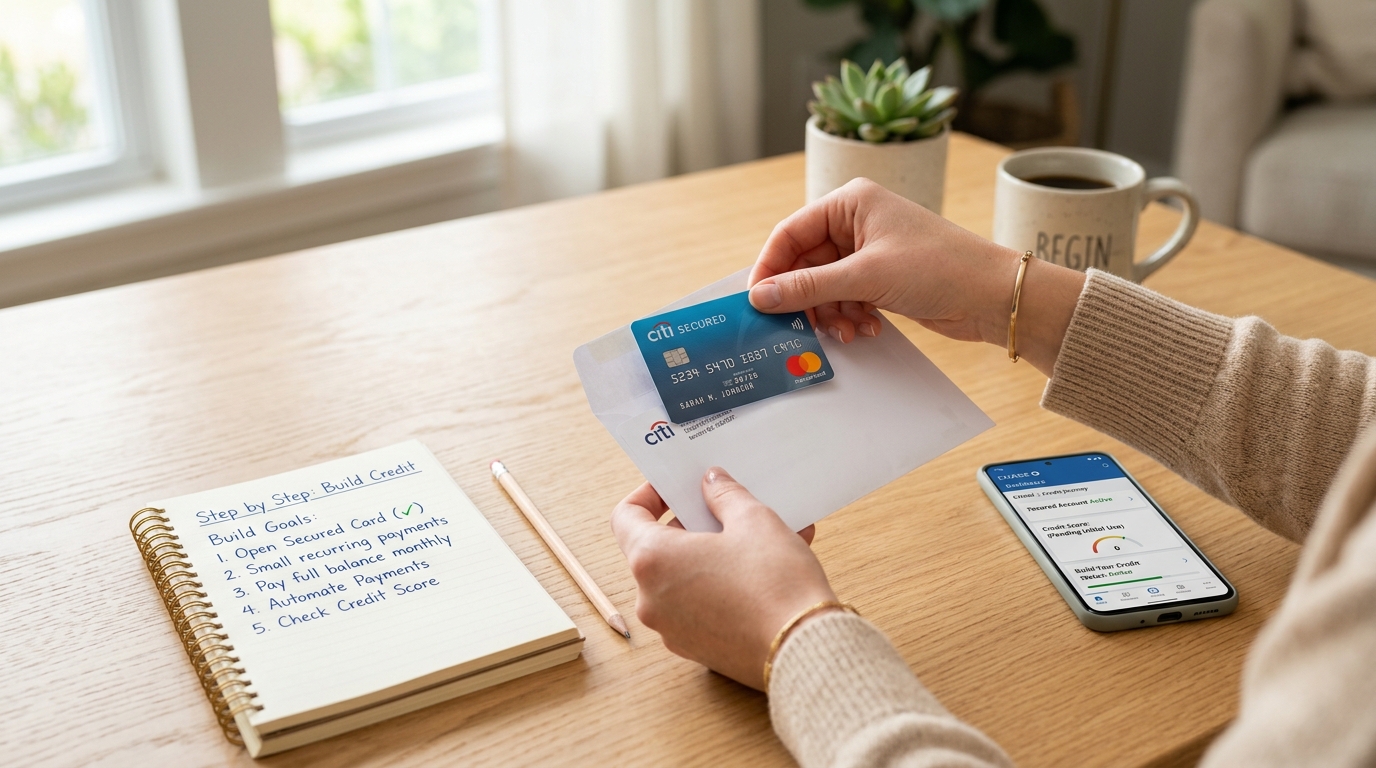
There is a strange trap that almost everyone runs into at some point. You need credit history to get approved for credit, but you cannot get credit history without first being approved for something. It feels like a locked door with no key, and it catches out students, new immigrants, people starting over after a rough patch, and honestly anyone who has simply never needed a credit card before.
The good news is that this trap has a well worn way out. Thousands of people build solid credit from absolutely nothing every year, and the steps to do it are not complicated. They just take consistency and a bit of patience. In this guide we will walk through exactly how it works, step by step, for both the United States and the United Kingdom, since the two systems work differently enough that they deserve separate explanations.
Before we get into it, a quick honest note. This article explains how credit building generally works. It is not personal financial advice, and specific products, interest rates, and credit scoring rules can change. Always check the current terms directly with any lender or card issuer before applying.
What Having No Credit History Actually Means
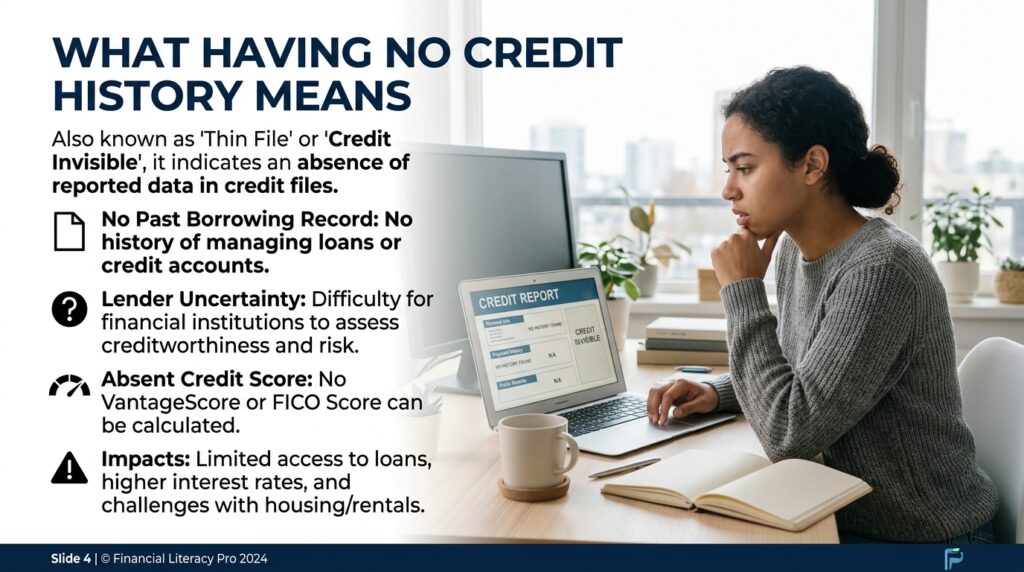
Having no credit history does not mean you are seen as a risky borrower. It means lenders simply have no information to judge you by at all. In the US, this is often called being credit invisible. In the UK, lenders describe it as having a thin file. Either way, the practical effect is the same. Without any track record, most mainstream lenders will not take a chance on you, not because they think you are bad with money, but because they genuinely cannot tell one way or the other.
This matters more than people realize. A weak or missing credit history in the US can affect your ability to rent an apartment, the price you pay for car insurance, and sometimes even job applications. In the UK, it can make it harder to get a mobile phone contract, a mortgage, or even some rental agreements. Building credit is not just about qualifying for a shiny rewards card someday. It is genuinely practical, everyday infrastructure for your financial life.
How Credit Scores Actually Work
In the US, your credit score is generated by looking at your history across a small number of factors. Payment history matters the most, making up around thirty five percent of a typical FICO score, since it answers the single most important question a lender has, which is whether you pay people back on time. Credit utilization, meaning how much of your available credit you are actually using, comes in as the next biggest factor at around thirty percent. The remaining pieces cover the length of your credit history, the mix of different credit types you have, such as credit cards versus loans, and how many new accounts you have recently opened.
In the UK, the three credit reference agencies, Experian, Equifax, and TransUnion, each calculate their own score using slightly different scales and formulas, so your Experian score and your Equifax score will not be identical numbers, even though they are describing the same underlying financial behavior. The same broad principles apply though. Paying on time, keeping balances low relative to your limits, and having a track record over time are what matter most everywhere.
In both countries, the underlying idea is identical even if the details differ. Lenders want evidence that you consistently pay back what you borrow. Everything you do to build credit is really just generating that evidence over time.
Building Credit From Scratch in the US, Step by Step
Step one: open an account that actually reports to the credit bureaus
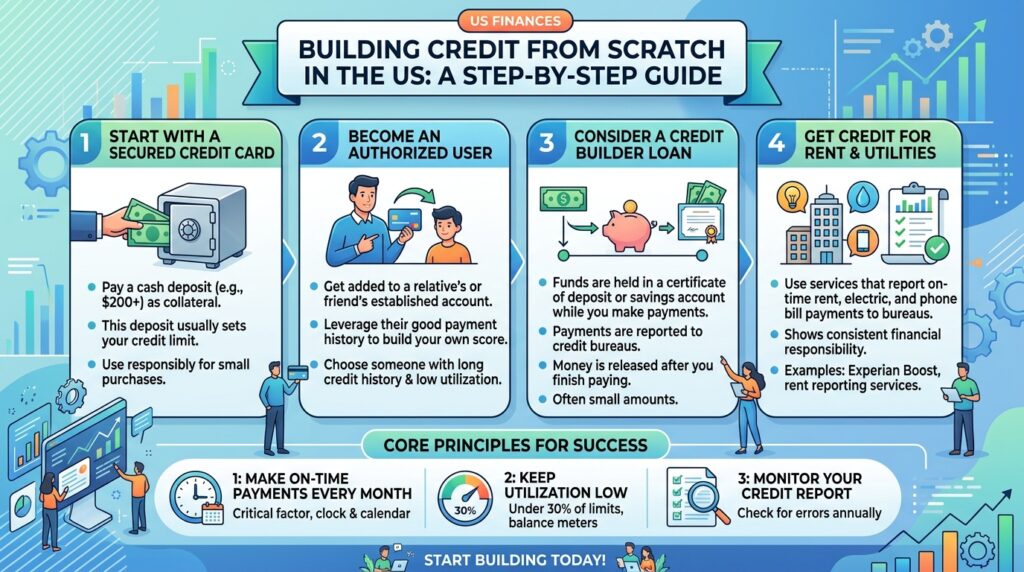
This is the single most important starting point. Not every financial product reports your activity to Equifax, Experian, and TransUnion, the three major US credit bureaus. A basic debit card, for instance, does nothing for your credit, since there is no borrowing involved. You need an account specifically designed to report your payment activity.
The most common starting point is a secured credit card. You put down a refundable deposit, often around two hundred dollars, and that deposit becomes your credit limit. From that point on, it behaves like a completely normal credit card. You use it, you get a statement, and you pay it off. The deposit exists purely to protect the issuer since you have no track record yet, not because you are treated any differently in how the card works day to day.
A credit builder loan works a little differently and is offered by many credit unions, community banks, and online lenders. Instead of receiving money upfront like a normal loan, the lender holds the loan amount in a locked savings account while you make small monthly payments toward it. Once you have paid it off in full, the money is released to you. Your on time payments are reported to the credit bureaus the entire time, so you end up building a track record and a small pot of savings at the same time.
Becoming an authorized user is another effective option if you have a trusted family member, such as a parent or spouse, with a long standing credit card in good standing. They add you to their account, and their positive history can appear on your own credit report, sometimes giving you an almost instant credit history even before you have used the card yourself. It is worth agreeing in advance not to actually use the card, simply to remove any risk of accidentally adding to their balance.
Some newer services also report your rent, utility, or phone bill payments directly to the credit bureaus, giving you another way to build history using payments you are already making anyway.
Step two: use the account lightly and predictably
Once you have an account that reports, resist the urge to use it heavily. You do not need to carry a balance or spend a lot of money to build credit. A few small, planned purchases each month, like a regular grocery bill or a subscription, followed by paying the full balance off before it is due, is exactly what you want to demonstrate.
Step three: pay on time, every single time
This is worth repeating on its own because it matters more than anything else on this list. Since payment history is the single largest factor in your score, even one missed payment can set you back significantly and can stay on your report for years. Setting up automatic minimum payments as a safety net, even if you plan to pay in full manually, is a simple way to protect yourself from an accidental late payment.
Step four: keep your utilization low
Utilization is the percentage of your available credit that you are actually using at the moment your statement is generated. If your card has a five hundred dollar limit and your balance sits at fifty dollars when the statement closes, your utilization is ten percent. Most experts suggest staying under thirty percent, and the highest scores tend to belong to people who consistently stay in the single digits. Paying down your balance before your statement date, rather than just before the due date, can meaningfully improve this number.
Step five: check your credit reports regularly
You are entitled to free credit reports and can monitor your score through many banks and credit card apps at no cost. Checking regularly lets you catch errors, confirm your accounts are reporting correctly, and track your progress over time. If you spot something wrong, you have the right to dispute it directly with the credit bureau.
What kind of timeline should you expect
Most people can generate an initial credit score within about six months of opening a reporting account, since some scoring models need that much history before they can produce a number at all. Reaching a genuinely good score, often considered anywhere above the high six hundreds, typically takes twelve to twenty four months of consistent, responsible use. Using a secured card, an authorized user account, and a credit builder loan together at the same time tends to speed this process up, since you are generating positive history across more than one account simultaneously.
Building Credit From Scratch in the UK, Step by Step
Step one: register on the electoral roll
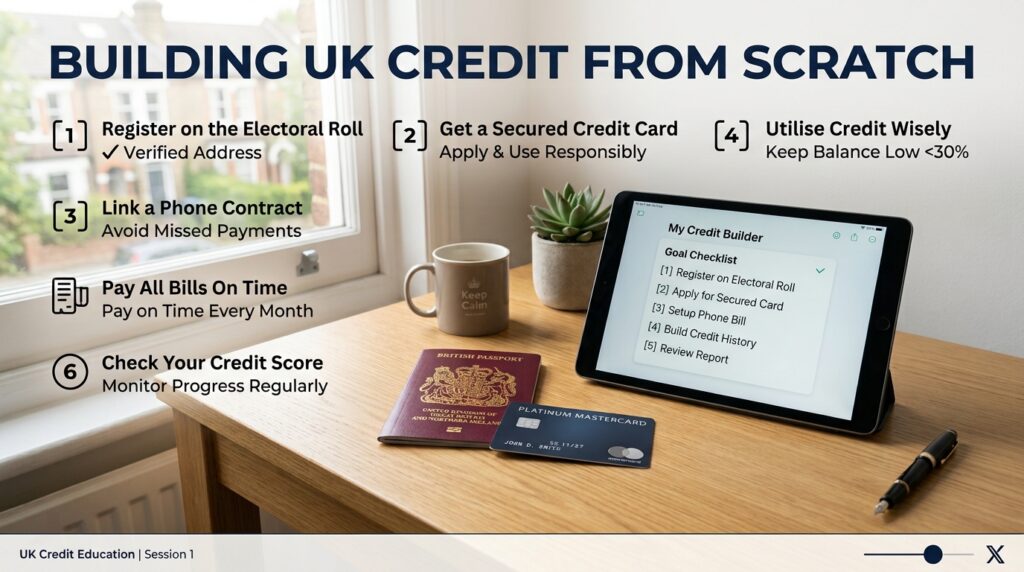
This is genuinely the single most effective free action available in the UK, and it is astonishing how many people skip it. Credit reference agencies use the electoral roll to confirm your name and address, and many lenders will automatically decline applicants who are not registered, purely because it raises fraud concerns rather than any judgment about your actual finances. Registering typically takes a matter of minutes online and can meaningfully improve your file within four to six weeks. If you are not eligible to register, for example because you are not a UK national, you can instead ask a credit reference agency to add a note of correction explaining your situation.
Step two: open a current account and use it actively
Having a UK bank account and using it for regular transactions, like your salary going in and bills going out, helps establish a financial footprint even before you apply for any credit product. Digital banks such as Starling and Monzo are often easier to open than traditional high street accounts if you do not yet have long term proof of address, which makes them a common first step for newer arrivals to the UK.
Step three: apply for a credit builder card
Once you have the basics in place, a credit builder card from a provider such as Aqua, Vanquis, or Capital One is one of the most direct ways to start generating a credit file. These cards typically come with fairly low limits, often somewhere between two hundred fifty and one thousand five hundred pounds, and noticeably higher interest rates than mainstream cards, often in the thirty to forty percent range. This higher rate is exactly why the strategy matters so much here. Use the card for small, planned purchases each month and pay the full balance off automatically before interest is ever charged. Treated this way, the high interest rate becomes irrelevant, since you never actually pay it, while you still get the benefit of the positive payment history being reported every month.
Step four: sign up for Experian Boost
Experian Boost is a free service that links to your bank account and adds recurring payments, such as Council Tax, Netflix, or other regular bills, to your Experian credit file. This can add a meaningful number of points to your score using payments you are already making, without requiring any new credit product at all.
Step five: keep utilization low and space out applications
Just like in the US, staying below around thirty percent utilization on any revolving credit matters, and the reported figure is generally whatever your balance was on your statement date, not your average balance throughout the month. It is also worth spacing out any new credit applications by at least a month or so, since each application leaves a mark on your file, and several close together can make you look like you are suddenly in financial difficulty, even if that is not the case at all.
Step six: check all three credit reports and fix errors
Because Experian, Equifax, and TransUnion each hold slightly different information and calculate scores differently, it is worth checking your free report with each of them rather than assuming they show the same picture. If you spot outdated addresses, accounts you do not recognize, or genuine mistakes, you can dispute them directly with the relevant agency.
What kind of timeline should you expect
Going from essentially no file to a genuinely solid score is realistic within twelve to eighteen months of consistent, disciplined behavior. Some improvements, like electoral roll registration, can show up within a matter of weeks, while others, like the length of your credit history itself, simply take time to accumulate. There is no way to meaningfully shortcut this part. Consistency really is the main ingredient.
Common Mistakes That Slow People Down
A few habits trip up almost everyone who tries to build credit for the first time, in both countries.
Applying for several credit products at once, hoping one of them will approve you, tends to backfire, since each hard application leaves a mark on your file and can make you look desperate for credit rather than simply new to it.
Closing an account after just a few months, even one you barely used, removes the length of history you were building and can actually set you back rather than help.
Carrying a large balance on a credit card, thinking that more usage automatically means more credit building, is a myth. What actually matters is paying on time and keeping your balance low relative to your limit, not how much you spend.
Ignoring your credit report entirely and simply hoping things are fine is a missed opportunity. Small errors, like an old address or an account that is not actually yours, are more common than people expect, and they are usually easy to fix once you spot them.
Special Situations Worth Knowing About
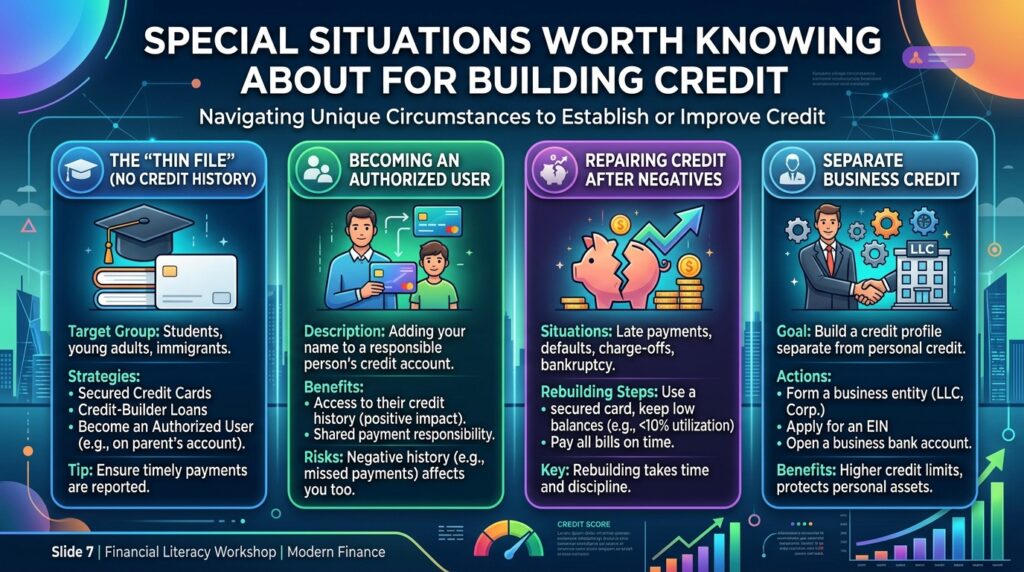
Students
If you are a student in the US, some card issuers offer starter credit cards designed specifically for students, sometimes with more lenient approval requirements than a standard unsecured card, since issuers recognize that students are simply early in their financial lives rather than actually risky. In the UK, students often find that a basic student bank account combined with a credit builder card, along with registering on the electoral roll at their term time address, is enough to get started, since most mainstream credit cards are genuinely difficult to get approved for without any history at all.
New immigrants
One frustrating reality worth knowing upfront is that credit history generally does not cross borders. If you built excellent credit in another country, that history will not transfer to a US or UK credit file, and you will effectively be starting from zero again, regardless of how strong your financial track record was back home. The good news is that the same steps in this guide apply just as well to you. Opening a bank account, registering on the electoral roll if eligible, and starting with a secured or credit builder product will get you moving in exactly the same timeline as anyone else starting from scratch.
Recovering from past financial difficulty
If you are rebuilding rather than starting completely fresh, for example after a period of missed payments or financial hardship, the same fundamentals apply, but you may also want to check your credit report closely for old negative items that are no longer accurate or that should have already aged off your file, since these generally have a limited lifespan and should not follow you forever. Rebuilding tends to move a little faster than starting from absolute zero, since a strong recent track record can outweigh older negative history over time.
A Few Common Questions
Will checking my own credit report lower my score? No. Checking your own report is considered a soft inquiry and does not affect your score at all, in either the US or the UK. You can and should check it as often as you like.
Do I need to carry a balance and pay interest to build credit? No, and this is one of the most persistent myths out there. Paying your balance off in full every month builds credit just as effectively, and it saves you a significant amount of money in interest along the way. There is no credit building benefit to carrying debt you do not need.
What if I get declined for a secured card or credit builder product? This is uncommon since these products are specifically designed for people with no history, but if it happens, it is worth asking the issuer directly why, since it may simply be a documentation or verification issue rather than anything to do with your actual finances.
Building credit from nothing is genuinely one of those situations where slow, boring, and consistent beats fast and clever every single time. There is no legitimate shortcut that skips the need for a real track record over real months. What you can control is making sure every single account you open reports properly, that you never miss a payment, and that you keep your balances low. Do those three things consistently for around a year, and you will very likely go from having no file at all to having a genuinely solid one.
It also helps to remember that this is not a one time project you finish and forget about. Good credit habits, paying on time and keeping utilization low, are simply good financial habits in general, and continuing them well after your score looks healthy is what keeps it that way for the long run.
Final Thoughts
Starting with no credit history can feel discouraging, especially when it seems like everyone else already has a system that works for them. The truth is that almost everyone with strong credit today started exactly where you are now, at zero, with no track record at all. The path out is well understood and genuinely does not require anything complicated. Open an account that reports, use it lightly, pay on time without exception, and give it time.
A year from now, the effort you put in during these early months will very likely look completely worth it, whether that shows up as approval for an apartment, a better interest rate on a car loan, or simply the quiet confidence of knowing your financial foundation is solid.
This article is for general information only and is not personal financial advice. Credit scoring models, interest rates, and specific products change over time, so always check current terms directly with any lender, bank, or credit reference agency before applying.