


Traveling costs money. Flights, hotels, meals, and little extras add up fast. But what if your everyday spending could quietly pay for some of that? That is the whole idea behind travel rewards credit cards. You spend on things you were already going to buy, groceries, gas, streaming subscriptions, and in return you earn points or miles. Those points can later turn into flights, hotel stays, or even cash back toward travel expenses.
If you are new to this world, it can feel confusing. There are dozens of cards, strange terms like APR and transfer partners, and a lot of conflicting advice online. This guide is written for beginners in the USA and the UK who want a clear, simple explanation of how these cards work, what to look for, and how to pick a good first card without falling into common traps.
What Exactly Is a Travel Rewards Credit Card
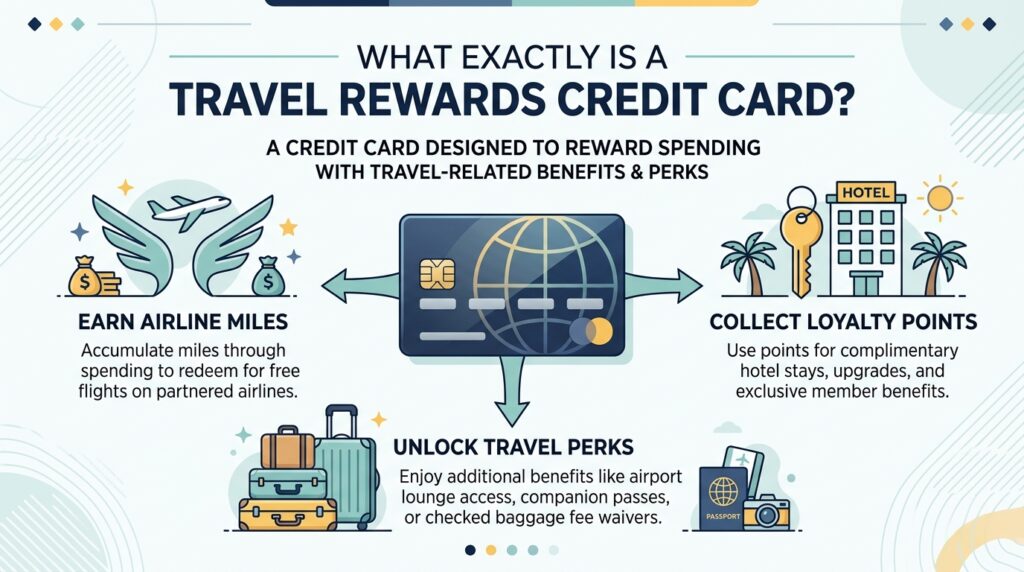
A travel rewards credit card is a normal credit card that gives you points or miles for every pound or dollar you spend. Instead of getting a small percentage back as cash, you collect points that you can later redeem for travel related things.
There are two broad categories.
The first is a general travel card. These earn flexible points that are not tied to one specific airline or hotel. You can usually move these points to several different airline or hotel programs, or sometimes redeem them directly for statement credit against travel purchases.
The second is a cobranded card. These are tied to one specific airline or hotel chain, like a British Airways card or a Delta card. You earn miles or points in that one loyalty program, and you often get extra perks with that particular brand, such as free checked bags or priority boarding.
Both types can be great for beginners, but they work a little differently, so it helps to understand the difference before choosing one.
Why Beginners Should Consider One
If you already use a debit card or a basic credit card for your daily spending, you are essentially leaving free rewards on the table. Many travel cards let you earn a bonus amount of points just for signing up and hitting a minimum spending requirement within the first few months. This welcome bonus alone can sometimes be worth several hundred dollars or pounds in flights or hotel stays.
On top of that, ongoing spending earns you a steady stream of points. Someone who spends normally on groceries, transportation, and dining could realistically earn enough points for a free flight once or twice a year, just from spending they would have done anyway.
The catch is that these cards only make sense if you pay your balance in full every month. Carrying a balance means paying interest, and that interest cost will almost always outweigh the value of the points you earn. So the golden rule before getting any rewards card is this: only use it if you can pay it off in full, every single month.
Key Terms You Need to Understand First
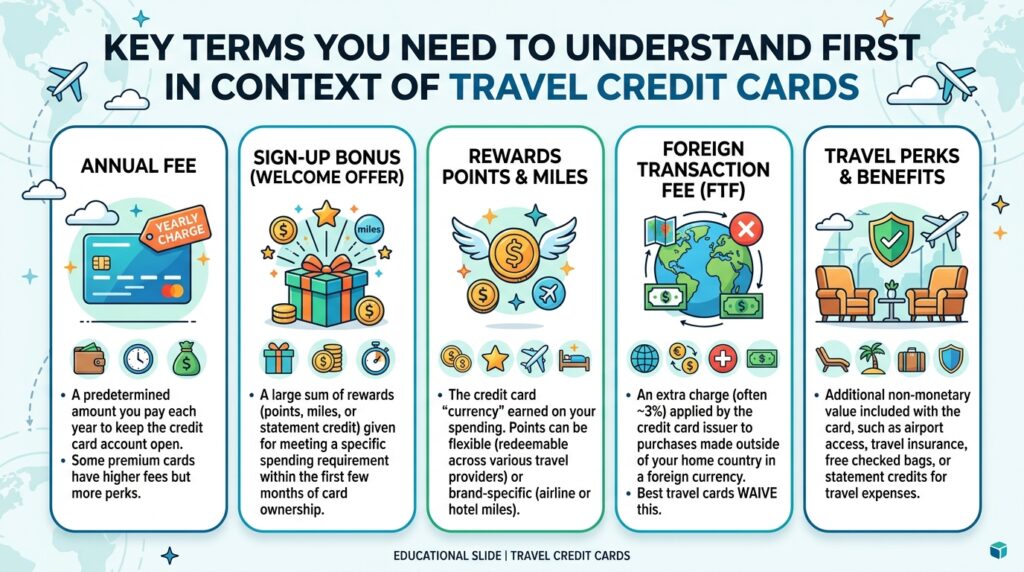
Before comparing cards, it helps to know a few basic terms.
Annual fee is the yearly cost of holding the card. Some cards charge nothing, others charge a noticeable amount but offer much richer rewards and perks in return.
APR stands for annual percentage rate. This is the interest rate you get charged if you carry a balance instead of paying it off in full. For rewards cards, this rate tends to be higher than average, which is another reason to avoid carrying debt on them.
Sign up bonus, sometimes called a welcome offer, is the extra chunk of points you get after spending a certain amount within a set number of months after opening the account.
Points versus miles is mostly just naming. Airlines usually call their currency miles, while general purpose cards and hotel programs usually call it points. They function the same way.
Transfer partners are the airlines and hotels that a flexible points program lets you move your points to. This matters a lot because the value of a point can change dramatically depending on how you use it. Redeeming points for cash back is usually the least valuable option, while transferring to an airline for a well chosen flight is often the most valuable.
Redemption value refers to how much a point is actually worth when you use it. A point used poorly might only be worth half a cent, while the same point used wisely on the right flight could be worth two cents or more.
What to Look For in Your First Travel Card
As a beginner, you do not need the most complicated or expensive card on the market. In fact, starting simple is usually smarter. Here is what actually matters when comparing options.
Look at the annual fee first and decide honestly whether you will use the card enough to justify it. A card with a fee of around ninety five dollars or pounds can still be a great deal if the perks and points you earn are worth more than that. But if you are unsure how often you will travel, a card with no annual fee is a safer place to start.
Look at the earning rate on everyday categories. Some cards give extra points on things like groceries, dining, or gas, which matters more than a flashy travel category you might rarely use.
Check the sign up bonus and the spending requirement attached to it. Make sure the spending requirement is realistic for your normal budget. Never spend extra money just to chase a bonus, since that defeats the entire purpose.
Look at flexibility. General travel cards that let you transfer points to multiple airlines and hotels tend to give beginners more freedom, since you are not locked into one loyalty program before you know your travel habits.
Check for included travel protections. Many rewards cards offer things like trip cancellation coverage, lost luggage reimbursement, or rental car insurance. These benefits alone can be worth a lot, even if you never use them for a big trip.
Finally, check whether the card charges foreign transaction fees. If you plan to travel internationally, this fee can quietly eat into your budget. The best travel cards charge nothing extra for spending abroad.
Popular Starter Options in the USA

In the United States, there are a few well known categories worth knowing about.
Mid tier flexible travel cards are a favorite starting point for many people. These typically charge a modest annual fee, offer a generous welcome bonus, and let you earn bonus points on categories like dining and travel purchases. The points usually transfer to a range of airline and hotel partners, giving you flexibility while you figure out your preferences.
No annual fee travel cards are another solid starting point, especially if you are still building credit or unsure how often you will travel. These cards often still offer a small sign up bonus and simple flat rate earning on all purchases.
Store or brand specific cards, such as those tied to a particular airline, can make sense if you already fly one airline regularly. The perks, like free checked bags or priority boarding, can add up quickly for frequent travelers on that airline, even if the points themselves are less flexible.
Premium cards with higher annual fees exist too, offering things like airport lounge access and bigger bonus categories. These are usually better suited for people who travel often enough to make full use of the benefits, rather than absolute beginners.
Popular Starter Options in the UK
In the United Kingdom, the travel rewards landscape looks a little different because of regulations that limit how much banks can charge merchants, which affects how generous some rewards can be. Still, there are good beginner options.
Airline cobranded credit cards, particularly those linked to major airlines, are popular in the UK. These often come with companion voucher offers, meaning you can bring a partner along on a flight using far fewer points than usual, which can be a huge value for couples or families.
Hotel cobranded cards work similarly, rewarding you with free nights or status upgrades at a particular hotel chain based on your spending.
General rewards cards from larger banks also exist, offering points that can be converted into airline miles through a rewards program, giving a bit more flexibility than a single airline card.
It is worth noting that in the UK, many of the most generous travel rewards cards come with an annual fee, since the flat welcome bonuses tend to be smaller than what is common in the US market. Reading the terms carefully before applying is especially important here.
How to Actually Use Your Points Well
Earning points is only half the story. Using them well is where the real value comes from.
The biggest mistake beginners make is redeeming points for cash back or gift cards. While convenient, this usually gives you the lowest possible value for each point. Instead, look into transferring points to an airline or hotel partner for a specific trip, since this often stretches your points much further.
It also helps to book flights with some flexibility in mind. Award seats, meaning seats bookable with points, are often limited in number, so being open to different dates or nearby airports can make a big difference in what is available.
Pay attention to sweet spots. Every loyalty program has certain routes or hotel categories where the points required are unusually low compared to the cash price. A bit of research before booking can help you find these and get outsized value.
Try not to let points expire. Many programs deactivate points after a period of inactivity, so even a small transaction using your rewards account every so often can keep your points alive.
Common Mistakes Beginners Should Avoid
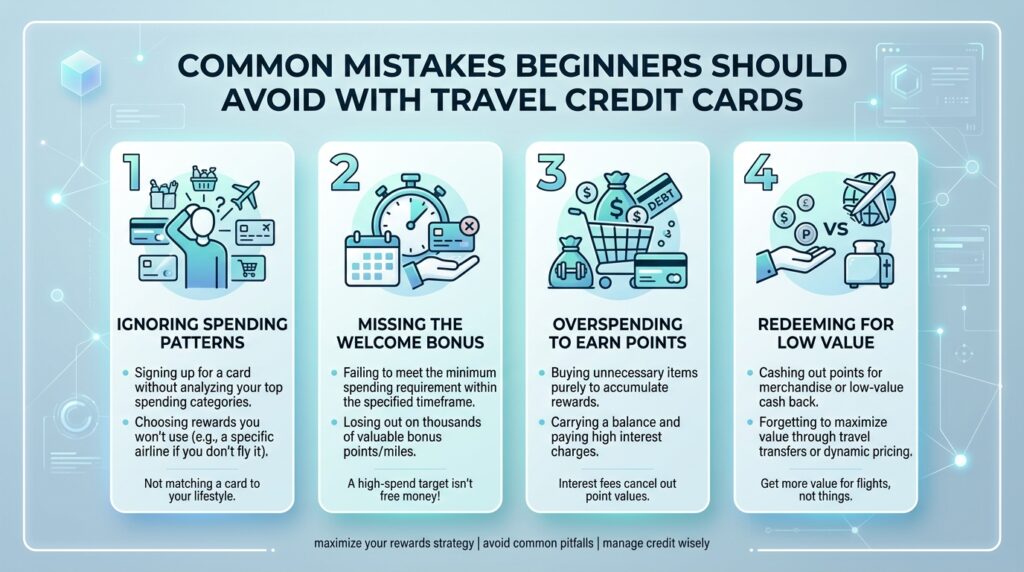
Applying for too many cards too quickly is one of the most common early mistakes. Each application can cause a small, temporary dip in your credit score, and banks often have rules limiting how many new cards they will approve you for within a certain time frame. It is smarter to apply for one card, use it well, and consider a second one only after several months.
Chasing a sign up bonus by overspending is another trap. If you buy things you do not need just to hit a spending threshold, you have already lost more money than the bonus is worth.
Ignoring the annual fee renewal is a mistake many people make. If a card charges a fee each year, mark a reminder for yourself to reevaluate whether the card is still worth keeping before that fee hits again.
Letting a balance carry over is perhaps the costliest mistake of all. The interest charged on a carried balance will almost always outweigh any points earned that month. If you are not confident you can pay in full, it is worth pausing your rewards card strategy until your finances are steadier.
Forgetting about foreign transaction fees while traveling abroad can also quietly cost you money on every single purchase, so always check this before your trip.
A Simple Plan for Getting Started
If all of this feels like a lot, here is a simple approach for someone just starting out.
Start by checking your credit score and history, since this affects which cards you are likely to be approved for. Most travel rewards cards require good to excellent credit.
Pick one flexible, moderately priced travel card rather than jumping straight into a premium option. This gives you room to learn how points work without a large financial commitment.
Set up your card for one or two recurring bills, like a phone bill or a subscription service, so you naturally earn points without changing your spending habits.
Pay the full statement balance every single month, ideally through an automatic payment so you never accidentally miss it.
After about a year, review how much you actually earned and how you used your points. From there, decide whether to keep the same card, add a second one that complements it, or consider a cobranded airline or hotel card based on how you actually travel.
Final Thoughts
Travel rewards credit cards are one of the simplest ways to make your everyday spending work a little harder for you. For beginners, the goal is not to chase every perk or collect every card on the market. It is to pick one sensible option, use it responsibly, pay it off in full each month, and slowly learn how the points and rewards systems work.
Over time, as you become more comfortable, you can expand into more advanced strategies like combining multiple cards, chasing specific sweet spots for flights, or exploring premium cards with richer perks. But every seasoned points collector started exactly where you are now, with one simple card and a bit of curiosity.
The most important thing to remember is that these cards are a tool, not a shortcut to free travel. Used wisely, they can meaningfully lower the cost of your next trip. Used carelessly, they can cost you far more in interest than you would ever earn in points. Start small, stay disciplined, and let the rewards build naturally alongside your normal life.