
Bankruptcy is one of those words that carries a lot of weight. It often brings up feelings of failure, embarrassment, or fear, even though it is simply a legal process designed to give people a genuine fresh start when debt becomes impossible to manage. If you are considering bankruptcy, or you have already gone through it, understanding exactly how it affects your credit, and what recovery actually looks like, can replace a lot of that fear with a clear plan.
This guide walks through what bankruptcy is, how it impacts your credit score and credit report, how long it stays with you, and most importantly, the practical steps you can take to rebuild your financial life afterward. It covers both the general process in the United States and the equivalent process in the United Kingdom, since the systems work a little differently.
What Bankruptcy Actually Is
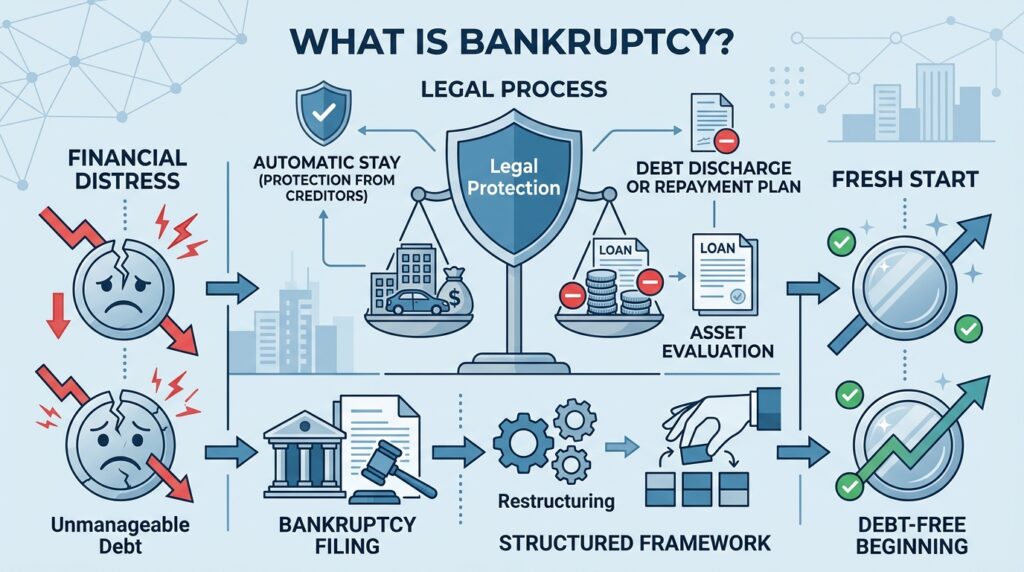
Bankruptcy is a legal process that helps individuals who cannot repay their debts get relief, either by having certain debts forgiven entirely or by reorganizing them into a more manageable repayment plan. It exists because the alternative, endless unpayable debt with no way out, would be harmful not just to individuals but to the wider economy as well.
In the United States, individuals typically file for either Chapter 7 or Chapter 13 bankruptcy. Chapter 7 involves liquidating certain assets to pay off creditors, after which most remaining unsecured debts are wiped away. Chapter 13 instead sets up a repayment plan over several years, allowing the person to keep more of their property while gradually paying back what they owe.
In the United Kingdom, the equivalent process is simply called bankruptcy, and it is usually pursued when someone owes a significant amount of money they cannot realistically repay. There are also alternative options in the UK, such as an individual voluntary arrangement, often shortened to IVA, which allows someone to repay a portion of their debt over time without going through full bankruptcy.
Regardless of which path someone takes, the common goal is the same. It offers a structured way out of overwhelming debt, with real consequences, but also a real path forward.
How Bankruptcy Affects Your Credit Score
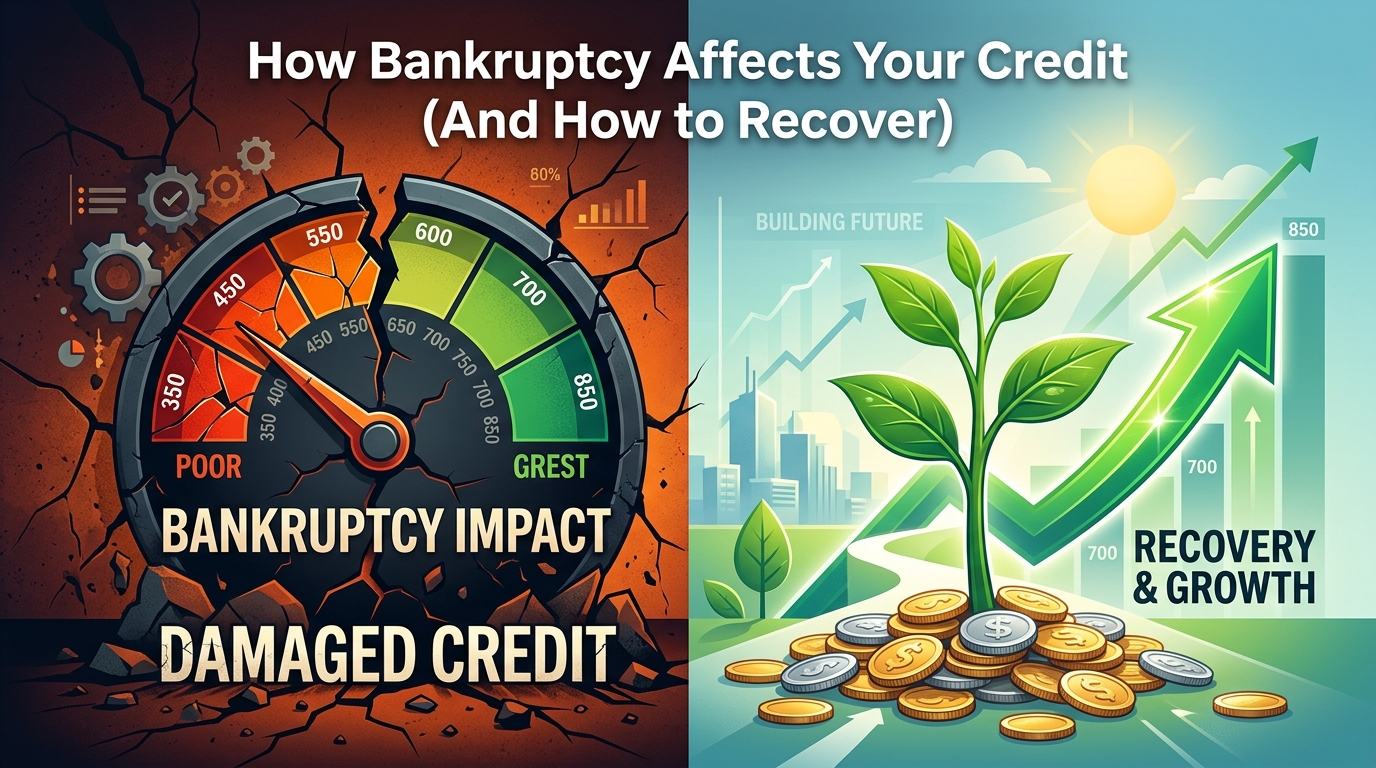
Filing for bankruptcy has a significant impact on your credit score, and this is one of the most immediate and noticeable effects people experience. Depending on where your score started, it is common to see a drop of one hundred points or more once the bankruptcy is recorded.
The exact size of the drop depends heavily on your credit history before filing. Someone who already had a lower score due to missed payments and high debt might not see as dramatic a decrease, since much of the damage was already reflected in their score. Someone who had excellent credit before filing tends to see a much larger and more noticeable drop, simply because they had further to fall.
This drop happens because credit scoring models are designed to predict the likelihood that someone will repay future debts. A bankruptcy filing signals to these models that a person was unable to repay past debts as agreed, which understandably lowers the predicted likelihood of future on time repayment, at least for a while.
How Long Bankruptcy Stays on Your Credit Report
In the United States, a Chapter 7 bankruptcy typically stays on your credit report for up to ten years from the filing date. A Chapter 13 bankruptcy usually stays for around seven years, since it involves an actual repayment plan rather than a full liquidation, and credit agencies view a partial repayment slightly less severely than a complete discharge of debt.
In the United Kingdom, bankruptcy typically remains on your credit file for six years from the date it was recorded, regardless of how long the bankruptcy process itself takes to be officially discharged, which is often around twelve months.
It is worth understanding that even though bankruptcy appears on your report for these lengthy periods, its actual impact on your score tends to lessen significantly over time, especially if you begin rebuilding positive credit habits soon after. The presence of the bankruptcy on your file matters less and less as more recent positive history accumulates alongside it.
What Happens to Other Debts and Accounts
When bankruptcy is filed, most of your other credit accounts are affected as well. Accounts that are included in the bankruptcy will often be reported as discharged or settled through bankruptcy, and depending on the type of account, they may be closed entirely.
Any accounts not included in the bankruptcy filing continue as normal, and your ongoing payment history on those accounts still matters. Keeping any surviving accounts in good standing during and after the bankruptcy process can help soften the overall impact and demonstrate that you are still capable of managing credit responsibly.
Secured debts, such as a mortgage or a car loan, may be handled differently depending on whether you choose to keep the asset attached to that debt or let it go as part of the bankruptcy process. This decision can affect both your immediate financial situation and how lenders view you afterward.
Will You Still Be Able to Get Credit After Bankruptcy
Many people assume that bankruptcy means credit is completely off the table for years, but this is not entirely accurate. It is true that your options will be more limited immediately afterward, and the terms you are offered will likely be less favorable, such as higher interest rates or lower credit limits. However, it is usually still possible to access certain types of credit relatively soon after bankruptcy, especially credit specifically designed to help people rebuild.
Lenders who specialize in working with people after bankruptcy or with poor credit history often exist precisely because there is demand for this kind of second chance credit. The terms will not be as generous as what someone with excellent credit receives, but responsibly managing this type of credit is often the first real step toward rebuilding.
Steps to Begin Recovering After Bankruptcy
Recovery from bankruptcy is absolutely possible, and many people go on to rebuild strong credit within a few years of filing. The process requires patience and consistency, but the steps themselves are fairly straightforward.
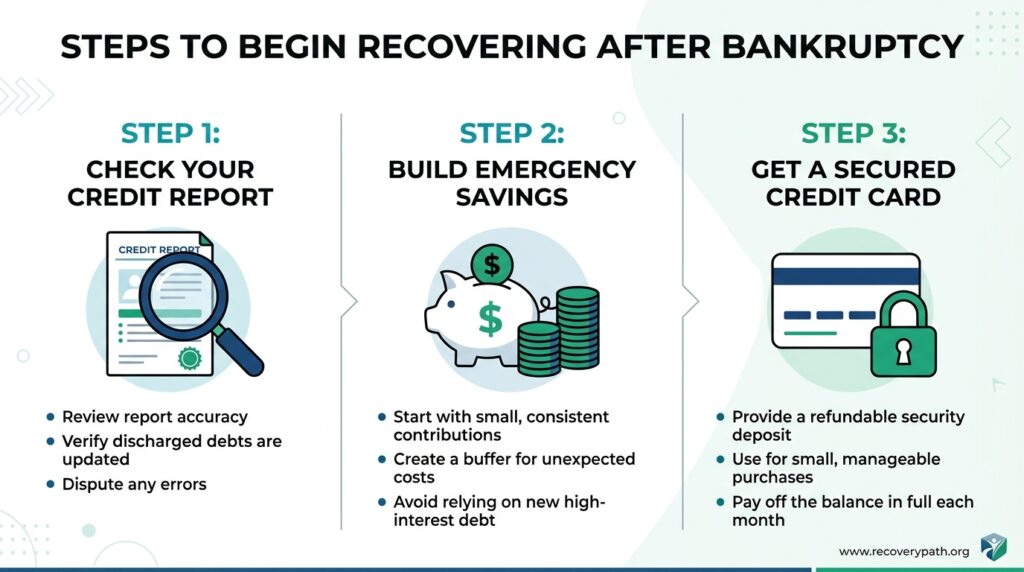
Understand Exactly What Happened on Your Credit Report
Once your bankruptcy has been processed, request a copy of your credit report from the major credit reporting agencies in your country. Review it carefully to confirm that the bankruptcy and any related accounts are being reported accurately. Mistakes do happen, and if an account is being reported incorrectly, such as showing a balance still owed on a debt that was actually discharged, disputing this error can meaningfully help your recovery.
Create a Realistic Budget
Before taking on any new credit, it helps enormously to build a clear picture of your income and expenses. A realistic budget helps you avoid falling back into the same patterns that may have contributed to financial difficulty in the first place. This does not need to be complicated. Simply tracking what comes in and what goes out each month, and making sure spending stays below income, creates a stable foundation for everything that follows.
Build an Emergency Fund, Even a Small One
One of the most common paths into serious debt is an unexpected expense, such as a medical bill or a car repair, that someone had no savings to cover. Even a modest emergency fund, covering just a month or two of basic expenses, can prevent a small financial shock from turning into a much bigger problem down the road.
Consider a Secured Credit Card
A secured credit card requires you to put down a cash deposit, which then becomes your credit limit. Because the lender holds this deposit as collateral, secured cards are much easier to get approved for after bankruptcy, even with damaged credit. Using a secured card responsibly, meaning small purchases paid off in full each month, gives you a simple, low risk way to start rebuilding a positive payment history.
Consider a Credit Builder Loan
Some banks and credit unions offer what is called a credit builder loan, designed specifically to help people establish or rebuild credit. With this type of loan, the money you borrow is actually held by the lender in a locked account while you make payments, and you receive access to it only once the loan is fully paid off. Your on time payments are reported to credit agencies throughout, helping build a positive track record.
Keep All Payments On Time, Every Time
Once you have any form of credit again, whether a secured card, a credit builder loan, or a bill in your own name like a phone contract, paying on time every single month is the single most powerful thing you can do for your credit recovery. Payment history carries enormous weight in credit scoring, and a consistent, on time track record after bankruptcy sends a strong signal that your financial habits have genuinely improved.
Keep Balances Low Relative to Limits
If you have any revolving credit, such as a credit card, try to keep your balance well below the total limit. Using too much of your available credit, even if you pay it off eventually, can signal higher risk to lenders and negatively affect your score. Keeping usage low and paying in full each month shows healthy, controlled credit use.
Be Patient and Avoid Rushing
It can be tempting to try to rebuild credit as quickly as possible, sometimes by applying for several credit products at once. This approach often backfires, since multiple applications in a short period can itself lower your score and make lenders wary. A slower, steadier approach, adding one responsible account at a time and proving reliability over months, tends to produce better long term results.
How Long Full Recovery Usually Takes
While bankruptcy can technically remain on your credit report for six to ten years depending on the type and country, this does not mean it takes that long to see meaningful improvement in your score or your ability to access credit.
Many people begin seeing noticeable score improvements within one to two years of consistent, responsible credit behavior after bankruptcy. Within three to five years, it is common for people to qualify for more mainstream credit products, sometimes including standard credit cards or auto loans with reasonable terms. Full recovery to excellent credit standing, comparable to where someone might have been before financial trouble began, often takes longer, but steady progress is usually visible well before the bankruptcy fully drops off the credit report.
Emotional Recovery Matters Too
While this guide focuses mostly on the practical and financial side of recovering from bankruptcy, it is worth acknowledging that the emotional side matters just as much. Many people feel a deep sense of shame or failure after going through bankruptcy, even though it is simply a legal tool that exists precisely because financial hardship happens to all kinds of people, often due to circumstances beyond their control, such as illness, job loss, or unexpected life events.
Approaching recovery with patience toward yourself, rather than harsh self judgment, tends to lead to better outcomes overall. People who view bankruptcy as a fresh starting point, rather than a permanent label, are often more consistent and successful in rebuilding their financial habits going forward.
Mistakes to Avoid During Recovery
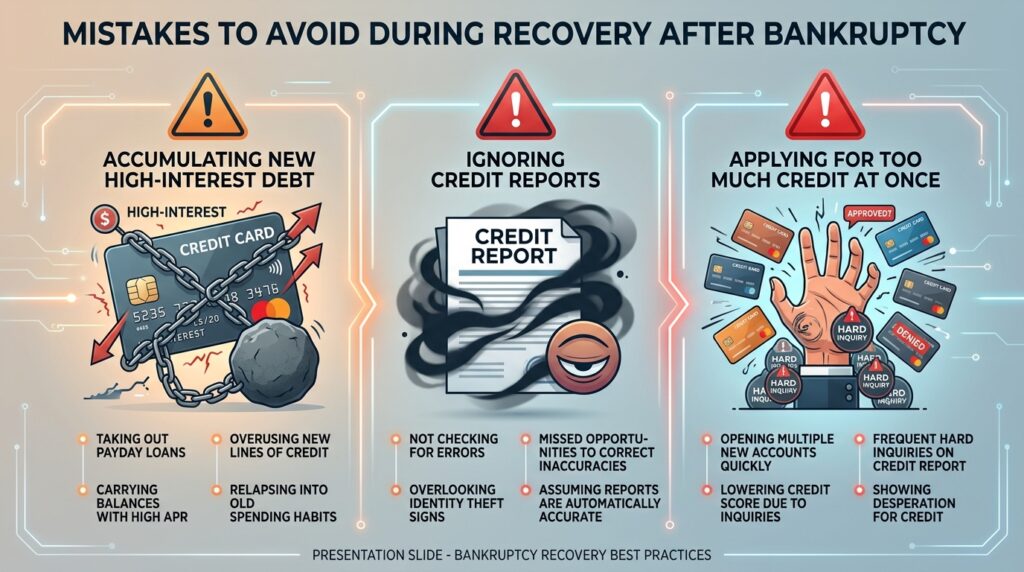
Ignoring your budget and slipping back into old spending habits is one of the most common setbacks people experience after bankruptcy. Since a fresh start is exactly what bankruptcy is meant to provide, it is worth using this period deliberately to build better habits rather than simply returning to the patterns that contributed to financial trouble before.
Avoiding credit altogether out of fear can also slow down recovery. While it is understandable to want to avoid credit after a difficult experience with debt, having no credit activity at all makes it harder for your score to improve, since there is little recent positive history for lenders to evaluate. A small, carefully managed amount of credit is usually a healthier path than avoiding it completely.
Falling for offers that seem too good to be true is another risk worth watching for. Some companies specifically target people recovering from bankruptcy with high fee credit products or so called credit repair services that promise unrealistic results. Doing careful research before signing up for any new financial product helps avoid adding new financial stress during an already sensitive period.
Final Thoughts
Bankruptcy can feel like the end of the road financially, but in reality, it is far more often the beginning of a new, more stable chapter. Yes, it affects your credit score significantly, and yes, it stays on your credit report for a number of years. But the impact fades steadily over time, especially when paired with consistent, responsible financial habits.
Recovery is not about waiting passively for the bankruptcy to disappear from your record. It is about actively rebuilding trust with lenders, one on time payment and one responsible decision at a time. Many people who have gone through bankruptcy go on to rebuild strong credit, buy homes, and manage their finances confidently within just a few years.
If you are currently facing this situation, know that it is entirely possible to come out the other side stronger and more financially aware than before. The path takes patience, consistency, and a willingness to build new habits, but it is a path that countless people have walked successfully, and one that you can walk too.