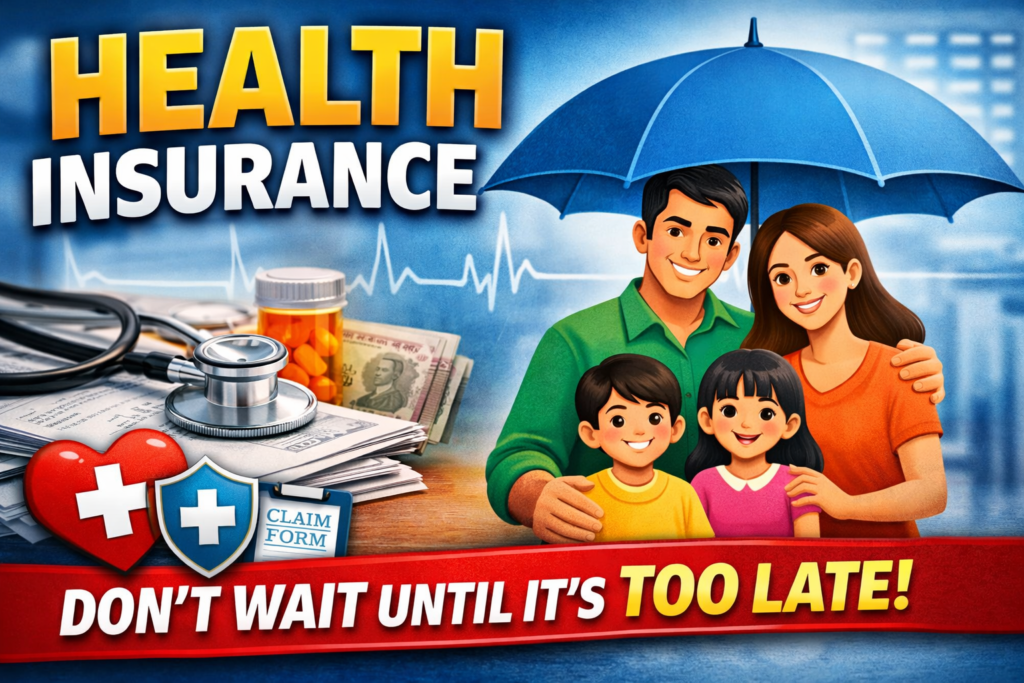

Health Insurance Your Financial Safety Net in an Unpredictable World
Let’s be honest—life has a way of throwing curveballs when you least expect them. One minute you’re fine, the next you’re dealing with a medical emergency that can drain your savings faster than you can say “hospital bill.” That’s where health insurance steps in. Think of it as your financial bodyguard—quietly working in the background until you really need it.
But what exactly is health insurance? And why does everyone keep saying it’s so important? Let’s break it down in a way that actually makes sense.
What Is Health Insurance?
Health insurance is basically an agreement between you and an insurance company. You pay a fixed amount (called a premium), and in return, the insurer covers part—or sometimes most—of your medical expenses.
It’s like a subscription plan, but instead of movies or music, it protects your health and your wallet.
Why Health Insurance Matters More Than You Think
Imagine this: you’re hit with a ₹2 lakh hospital bill out of nowhere. Without insurance, that’s a massive financial shock. With insurance? You might only pay a small portion.
Health insurance isn’t just about saving money—it’s about peace of mind. It allows you to focus on recovery instead of worrying about bills stacking up.
Here’s why it’s a must-have:
- Rising healthcare costs: Medical treatments are getting expensive every year
- Emergency coverage: Accidents and illnesses don’t come with warnings
- Cashless treatment: Many hospitals offer direct billing through insurers
- Tax benefits: You can save on taxes under applicable laws
Types of Health Insurance Plans
Not all health insurance plans are created equal. Choosing the right one depends on your needs, lifestyle, and budget.
1. Individual Health Insurance
Covers one person. Simple and straightforward.
2. Family Floater Plan
One policy covers the entire family. It’s like sharing a single umbrella during a storm.
3. Critical Illness Insurance
Provides a lump sum if you’re diagnosed with serious diseases like cancer or heart issues.
4. Group Health Insurance
Usually provided by employers. Great, but don’t rely on it completely—it ends when you leave the job.
Key Terms You Should Know (Without the Confusion)
Let’s decode some jargon—no boring dictionary definitions, promise.
- Premium: The amount you pay regularly for coverage
- Sum Insured: The maximum amount the insurer will pay
- Deductible: The amount you pay before insurance kicks in
- Co-payment: You share a percentage of the bill
- Network Hospitals: Hospitals where you get cashless treatment
Think of these as the “rules of the game.” Once you understand them, everything becomes easier.
How to Choose the Right Health Insurance Plan
Picking a health insurance plan can feel overwhelming. Too many options, too much fine print. But here’s a simple way to think about it.
Ask yourself:
- How much coverage do I need?
- Does it cover my family too?
- Are my preferred hospitals included?
- What illnesses are covered?
Pro tip: Don’t just go for the cheapest plan. That’s like buying a raincoat that only covers your shoulders—you’ll still get soaked.
Benefits of Having Health Insurance
Still wondering if it’s worth it? Let’s make it crystal clear.
Financial Protection
No more dipping into savings or taking loans for medical emergencies.
Access to Better Healthcare
You can afford quality treatment without hesitation.
Preventive Care
Many plans include free health check-ups—catch problems early.
Mental Peace
You sleep better knowing you’re covered. Simple as that.
Common Mistakes People Make
Even smart people mess this up. Don’t be one of them.
- Waiting too long to buy: Premiums increase with age
- Ignoring policy details: Always read the fine print
- Underinsuring: Low coverage can backfire badly
- Relying only on employer plans: What happens if you quit?
Health insurance isn’t something you “figure out later.” Later can be expensive.
Health Insurance in India: What’s Changing?
The health insurance landscape in India is evolving fast. More insurers, better plans, and digital claims processing are making things easier.
Post-pandemic, people have become more aware of the importance of health coverage. Insurers are also offering:
- COVID-19 coverage
- Telemedicine services
- Faster claim settlements
It’s like the industry finally realized—health isn’t optional.
Is Health Insurance Really Worth It?
Let’s flip the question.
Is it worth risking your savings, your family’s security, and your peace of mind just to save a few thousand rupees a year?
Health insurance isn’t an expense—it’s an investment. One that pays off when you need it the most.
Conclusion: Don’t Wait for a Wake-Up Call
Here’s the deal—no one plans to get sick or injured. But life doesn’t ask for permission. Health insurance is your backup plan, your safety net, your “just in case.”
So, why wait for a crisis to realize its importance?
Get covered today. Because when it comes to your health and finances, it’s always better to be safe than sorry.